Exclusive sales on ALL Dermal Fillers & Injectables!
Thinking about preventative Botox but not sure if the timing is right? Here's what you actually need to know before making a decision.

You’re not imagining it. That line between your brows or at the corner of your eyes — the one that used to disappear when you relaxed your face — is starting to stick around a little longer. It’s not dramatic yet. But you’ve noticed it, and you’re wondering if now is the time to do something about it.
That’s exactly the window preventative Botox is designed for. Not to change how you look, but to slow down what’s quietly happening beneath the surface. Here’s what the process actually involves, who it makes sense for, and why starting earlier tends to work better than waiting.
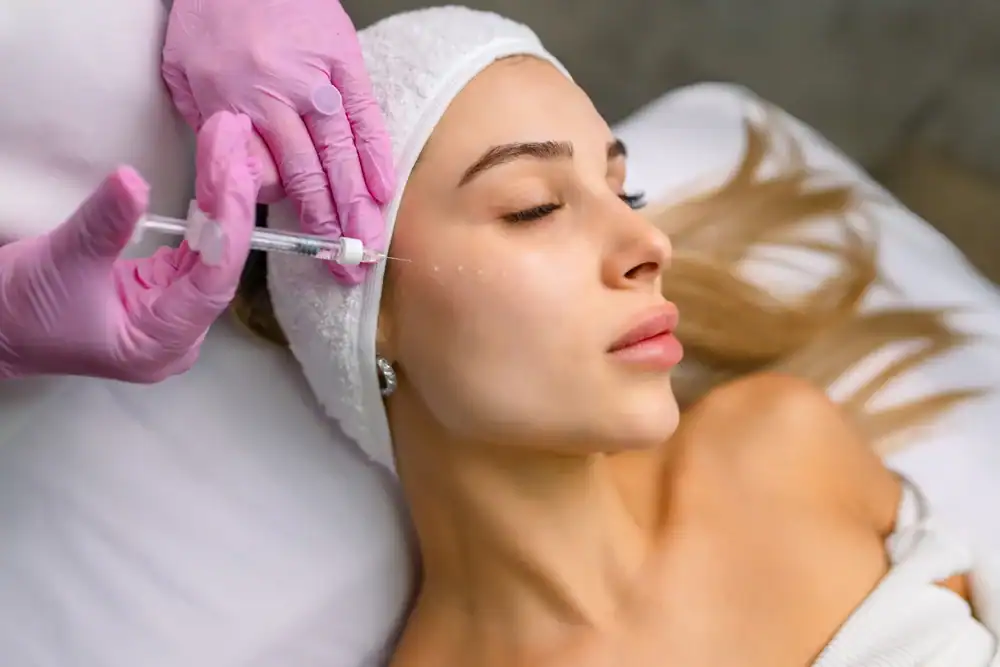
Botox works by temporarily reducing the activity of specific facial muscles — the ones responsible for repetitive movements like squinting, frowning, and raising your eyebrows. Every time those muscles contract, they crease the skin above them. Do that thousands of times over years, and those creases stop bouncing back. That’s how dynamic lines — the kind that only show up with expression — eventually become static lines that are visible all the time.
Preventative Botox interrupts that cycle before the lines have a chance to set. By softening muscle activity early, the skin above those muscles gets a break from the constant folding. Over time, that translates to less collagen breakdown, slower line formation, and a face that simply ages more gradually.
This distinction matters more than most people realize, because it’s the whole basis for why timing is everything with preventative treatment.
Dynamic wrinkles are the lines that appear when your face is moving — when you smile, squint into the sun, or furrow your brow during a long video call. At rest, your skin smooths back out. These are early-stage lines, and they’re the ideal target for preventative Botox. The muscle activity is there, the pattern is forming, but the skin hasn’t yet been permanently altered.
Static wrinkles are what those same lines become after years of repetition. They’re visible even when your face is completely relaxed — etched into the skin rather than just creased by movement. At this stage, Botox can still help soften the appearance of lines, but the treatment shifts from prevention to correction. You’re working against something that’s already established rather than getting ahead of it.
The reason preventative Botox works so well when started early is simple: it’s much easier to slow a process than to reverse one. Patients who begin treatment when they first notice dynamic lines — typically in their late 20s to early 30s — often find they need fewer units per session and that results last longer over time, because the muscles gradually become less active with consistent treatment. That means the investment tends to become more efficient, not more expensive, as the years go on.
There’s also a collagen component worth understanding. Sun exposure, pollution, stress, and repetitive muscle movement all degrade collagen and elastin — the proteins that keep skin firm and smooth. New York City’s environment accelerates that process. Between summer UV exposure, daily commutes, and the kind of stress that comes with living and working in one of the most demanding cities in the world, Brooklyn and Queens residents are dealing with more skin-aging factors than someone living in a quieter environment. Starting preventative treatment earlier is a reasonable response to real conditions.
The honest answer is that age alone isn’t the right metric. The better question is what your face is doing — and what it looks like when it’s doing it.
If you’re noticing lines that appear with expression and are starting to linger a bit after your face relaxes, that’s the signal. It doesn’t mean you need aggressive treatment. It means the window for early, conservative intervention is open. Most people reach this point somewhere in their late 20s to mid-30s, though genetics, sun exposure, and lifestyle play a significant role in the timing.
Skin type matters too. People with more expressive faces — those who communicate a lot through facial movement — tend to develop dynamic lines earlier. If you’ve spent years squinting outdoors, frowning at screens, or simply making the kind of animated expressions that come with being a real person in the world, your muscles have been working hard. That’s not a flaw; it’s just anatomy. And it’s exactly what preventative Botox is designed to address.
On the other end, if your skin is still completely smooth at rest and lines only appear with exaggerated movement, you may not need anything yet. A good injector will tell you that honestly — and that’s something worth paying attention to when you’re evaluating providers. The goal of a proper consultation isn’t to find a reason to treat you. It’s to assess whether treatment makes sense for where you are right now.
Candidacy also depends on your overall health, whether you’re pregnant or nursing, and whether you have any neuromuscular conditions. These are all things that get covered in a thorough pre-treatment consultation, which is why that step matters and shouldn’t be skipped or rushed.
What preventative Botox is not: a treatment for people who want dramatic transformation, a substitute for sunscreen and basic skincare, or something that works the same way for everyone. The dosing, placement, and frequency are all personalized based on your facial anatomy, muscle strength, and specific goals.
Want live answers?
Connect with a Dolce Aesthetics expert for fast, friendly support.
Most people considering preventative Botox for the first time have the same core concerns. They want to know if they’ll look natural, what the real commitment looks like, and whether the science actually holds up. These are fair questions, and they deserve straight answers — not marketing copy designed to move you toward a booking.
What follows are the questions we hear most often from patients across Brooklyn and Queens, answered as plainly as we can.

This is the fear that stops more people from starting than anything else — and it’s completely understandable. You’ve seen the overdone look. The eyebrows that don’t move, the forehead that’s too smooth, the face that reads as treated rather than rested. Nobody wants that, and nobody should have to accept it.
Here’s the thing: that outcome is the result of too much product, poor placement, or both. It is not an inevitable side effect of Botox itself. When preventative treatment is done correctly — with conservative dosing and precise placement based on your specific facial anatomy — you should still be able to raise your eyebrows, smile, squint, and show every emotion you’ve always shown. The goal is to soften the creasing, not eliminate the movement.
The difference between a natural result and an overdone one almost always comes down to the injector. In New York State, only licensed physicians, nurse practitioners, and physician assistants can legally administer Botox. But even within the legal pool, experience and training vary enormously.
At our practice, Jennifer DiLandro has been performing aesthetic injections since 2005 and holds Expert Level V certification — the highest injector level available through Allergan, the manufacturer of Botox. That certification represents advanced training in facial anatomy, injection technique, and product knowledge that most providers in Brooklyn and Queens simply don’t have. Paired with physician oversight from our board-certified Medical Director, Dr. Sophia Lubin, every treatment happens within a framework of real clinical accountability.
The reviews from our patients reflect that consistently — words like “natural,” “artistic,” “gentle,” and “you can’t tell she had anything done” come up again and again. That’s the standard we hold ourselves to, and it’s what a preventative treatment should deliver.
This concern keeps a lot of people on the fence, and it’s worth addressing directly because the myth around it is persistent and genuinely misleading.
If you stop getting Botox, your face returns to its natural aging trajectory. The muscles gradually resume their normal activity, lines may reappear over time, and your skin continues aging the way it would have regardless. There is no rebound effect. There is no accelerated aging. You will not look worse for having done it — you’ll simply look the way you would have looked anyway, just with some years of slower progression behind you.
The dependency fear is understandable, but it’s not grounded in how the treatment actually works. Botox is temporary by nature. Results typically last three to four months, and the effect fades as the body metabolizes the product and nerve signaling gradually returns. Nothing permanent happens to your face from a single treatment or even years of consistent treatment.
For patients across Brooklyn and Queens who are weighing the ongoing commitment, it helps to think about the math realistically. At $10–15 per unit, a preventative session typically involves fewer units than a corrective one. Most patients in the preventative phase come in two to three times per year. That’s a very different financial picture than the assumption that you’re signing up for monthly appointments indefinitely.
The other thing that happens with consistent preventative treatment is that many patients find they need fewer units over time, not more. As the targeted muscles gradually weaken from reduced use, the same effect requires less product. That’s the long-term efficiency argument for starting early — and it’s one of the more compelling ones.
If you’ve been holding off because you weren’t sure what you were actually committing to, that’s exactly the kind of question our free consultation is designed to answer. No treatment, no payment, no pressure — just a real conversation about where you are and what, if anything, makes sense for you right now.
The short version: if you’re noticing early lines and you’re curious about getting ahead of them, the science supports it, the timing matters, and the right provider makes all the difference.
Preventative Botox isn’t about chasing youth or fixing something that’s broken. It’s about understanding how your skin ages and making a deliberate choice about the pace of that process. For a lot of people in their late 20s and 30s — especially in a city where environmental stress, long hours, and constant screen time are just part of life — that choice makes real sense.
If you’re ready to have an honest conversation about whether preventative treatment is right for you, we serve patients across Brooklyn and Queens with the kind of experience, credentials, and straightforward approach that the decision deserves. Reach out to schedule your complimentary consultation and get a clear picture of where you stand.
Summary:
Share: