
Exclusive sales on ALL Dermal Fillers & Injectables!
Hear From Our Clients
A reputation built on 350+ client experiences across our premier locations.
You’re not looking for another temporary fix. You want to stop thinking about body hair altogether.
That’s what permanent hair reduction does. Studies show up to 90% of treated hair stops growing back. Not thinner. Not lighter. Gone. You’ll save hours every month—no more daily shaving, no more scheduling waxing appointments, no more ingrown hairs that ruin your confidence right before you need it most.
The process targets hair follicles with concentrated light energy, damaging them enough that regrowth slows dramatically or stops. After a series of treatments, most people find they can ditch razors and wax strips for good. Legs stay smooth. Underarms stay clear. Bikini lines stay bump-free. You get your time back and your skin stays consistently how you want it—without the constant maintenance.
We bring professional med spa and cosmetology services to Ramblersville with a focus on real results, not sales pitches. We understand that people in this close-knit Queens neighborhood value straight talk and quality work—not gimmicks.
Ramblersville residents know each other. They talk. When someone finds a service that actually delivers, word spreads fast in NYC’s smallest neighborhood. That’s why we prioritize doing the job right the first time, using FDA-approved technology and trained professionals who know how to treat different skin types safely.
You’re not a number here. You’re a neighbor looking for a solution that fits your life, your schedule, and your budget in the long run.

First, you’ll come in for a consultation. Our technician assesses your skin type, hair color, and the areas you want treated. This matters because different lasers work better for different combinations—Diode lasers for most skin types, Nd:YAG for darker skin, Alexandrite for lighter skin with dark hair.
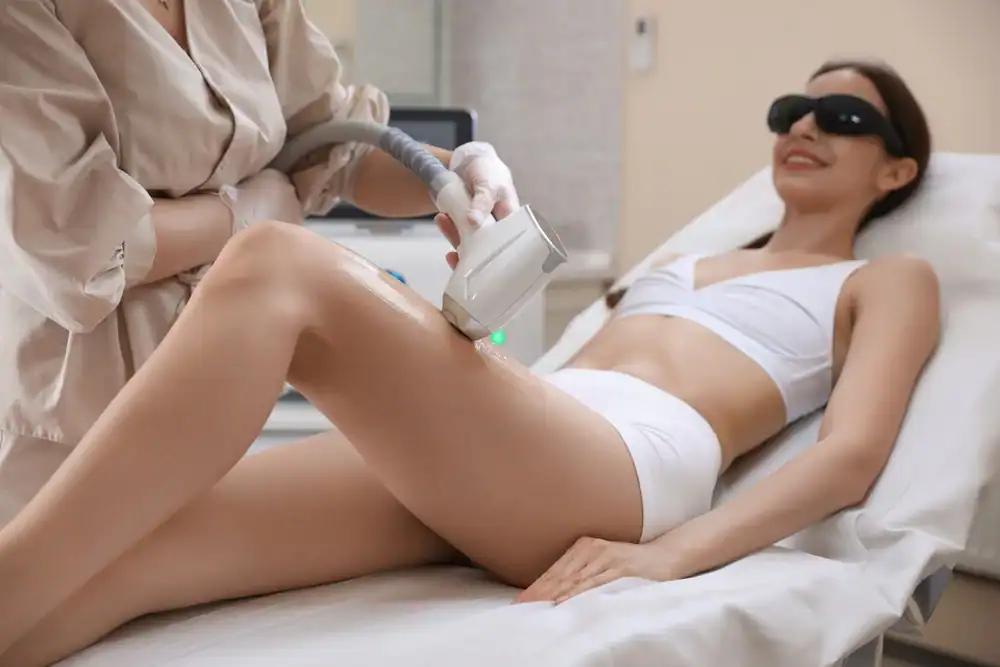
During the hair removal treatment session, a cooling gel gets applied to protect your skin. Then our technician uses a handheld device that delivers quick pulses of laser light to the treatment area. Most people describe it as a rubber band snap—brief discomfort, not unbearable pain. Modern devices include cooling mechanisms that make the process more comfortable than older technology. Sensitive areas like the bikini line or underarms might feel more intense than legs or arms, but sessions are quick.
Each pulse targets multiple hair follicles at once. The pigment in the hair absorbs the light, heats up, and damages the follicle enough to slow or stop future growth. You’ll need multiple sessions because hair grows in cycles, and the laser only works on actively growing hair. Most people need six to eight treatments spaced a few weeks apart. After that, you’re basically done. Some might need occasional touch-ups, but the constant cycle of shaving or waxing ends.

Ready to get started?
Laser hair removal isn’t the cheapest option upfront, but it’s the smartest investment long-term. When you add up years of razors, shaving cream, waxing appointments, and the time spent dealing with unwanted hair, professional laser treatments pay for themselves.
Here’s what’s included: a personalized consultation to determine the right laser type for your skin and hair, professional-grade equipment with built-in safety features, and trained technicians who adjust settings based on your comfort level and treatment goals. Sessions are quick—legs might take 30-45 minutes, underarms about 10 minutes, bikini line around 15-20 minutes.
For Ramblersville residents juggling work, family, and the realities of Queens life, convenience matters. Treatments fit into lunch breaks or evening schedules without requiring a trek across the city. There’s minimal downtime—you might see some redness that fades within hours, but you’re not sidelined. You can get back to your routine immediately. Over time, as hair thins and grows back slower, you’ll notice the difference in your daily life. No more rushing to shave before wearing shorts. No more avoiding the beach because you’re worried about stubble. Just smooth, consistent results that last.

Most people find laser hair removal less painful than waxing, especially after the first session. Waxing rips hair out from the root, which causes sharp, immediate pain across the entire treatment area. Laser hair removal feels more like quick snaps of a rubber band against your skin—brief discomfort rather than sustained pain.
The sensation varies depending on where you’re getting treated. Legs tend to be the least sensitive because the skin is thicker. Areas like the bikini line, underarms, or face can feel more intense due to thinner skin and proximity to nerve endings. But here’s the thing: each laser pulse lasts only a fraction of a second, and modern devices include cooling technology that soothes skin during treatment.
Pain also decreases with each session. As hair becomes finer and less dense, there’s less for the laser to target, which means less discomfort. Compare that to waxing, where the pain stays consistent every single time because you’re still pulling out full hair from the root. If you’ve been waxing for years and dreading each appointment, laser hair removal will likely feel like a relief.
Most people need six to eight sessions to see optimal results, but it depends on your hair type, skin tone, and the area being treated. Hair grows in cycles, and laser treatments only work on hair that’s actively growing at the time of your session. That’s why multiple treatments spaced several weeks apart are necessary—to catch different hair follicles as they enter the growth phase.
Coarser, darker hair typically responds faster because it absorbs more laser energy. Finer or lighter hair may require additional sessions. Areas with hormonal influence, like the face or bikini line, might need more treatments than areas like the legs or arms. We’ll give you a realistic timeline during your consultation based on your specific situation.
After your initial series of treatments, you’ll likely see a 70-90% reduction in hair growth. Some people are completely hair-free, while others might need occasional maintenance sessions once or twice a year. Either way, you’re looking at a fraction of the time and effort you’d spend on shaving or waxing over the same period.
Yes, but the type of laser matters. Older technology worked best on people with light skin and dark hair because of the contrast between skin tone and hair pigment. Modern lasers, particularly Nd:YAG lasers, are designed to safely treat darker skin tones without causing burns or pigmentation changes.
The key is working with trained professionals who know how to adjust laser settings for your specific skin type. Different lasers use different wavelengths—Alexandrite lasers work well for lighter skin, Diode lasers are versatile for various skin tones, and Nd:YAG lasers are the safest option for darker skin. We’ll assess your skin during the consultation and choose the appropriate laser to minimize risk and maximize results.
Side effects are generally mild and temporary—some redness or slight swelling that fades within a few hours. Serious complications like burns or scarring are rare when treatments are performed correctly by experienced providers using FDA-approved equipment. That’s why choosing a reputable med spa matters. You want someone who prioritizes safety and has the right technology for your skin type, not just the cheapest option available.
Before your session, shave the treatment area a day or two in advance. The laser targets the hair follicle beneath the skin, not the hair on the surface, so shaving is necessary. Avoid waxing, plucking, or threading for at least four weeks before treatment because those methods remove the hair follicle entirely, leaving nothing for the laser to target.
Stay out of the sun and avoid tanning beds for at least two weeks before your appointment. Tanned or sunburned skin is more sensitive and increases the risk of side effects. If you’re taking certain medications that make your skin more photosensitive, let us know during the consultation—we may recommend adjusting your treatment plan.
After your session, treat the area gently. You might see some redness or feel like you have a mild sunburn, which is normal and usually fades within a few hours. Apply aloe vera or a cool compress if you’re uncomfortable. Avoid hot showers, saunas, or intense workouts for 24-48 hours to prevent irritation. Keep the treated area out of direct sunlight and use sunscreen if you’ll be outside. We’ll give you specific aftercare instructions, but the main idea is simple: be gentle with your skin while it heals.
Cost depends on the size of the area you’re treating and how many sessions you need. Smaller areas like the upper lip or underarms typically cost less per session than larger areas like full legs or back. Most people pay anywhere from $200 to $400 per session, and remember, you’ll need multiple sessions to see full results.
While that might sound expensive upfront, consider what you’re spending on temporary solutions. If you’re waxing your legs every six weeks at $60 per session, that’s $520 a year. Over ten years, you’ve spent $5,200—and you’re still dealing with hair regrowth. Laser hair removal might cost $1,500 to $2,500 for a full treatment series, and then you’re done. The math makes sense when you factor in both money and time saved.
We offer package deals that reduce the per-session cost when you commit to a full treatment plan. Some also offer financing options to make the investment more manageable. During your consultation, ask about pricing for your specific needs and whether any promotions or packages are available. The key is understanding the total cost upfront so there are no surprises later.
Laser hair removal is technically “permanent hair reduction,” not complete permanent removal for everyone. Most people see a 70-90% reduction in hair growth after completing their treatment series. For many, that means no visible hair regrowth at all. For others, it means significantly thinner, lighter hair that grows back much slower than before.
The reason it’s not 100% permanent for everyone comes down to biology. Hormones, genetics, and age can all influence hair growth. Someone going through hormonal changes—pregnancy, menopause, or certain medical conditions—might see some hair regrowth over time. That said, even if some hair returns, it’s typically much finer and sparser than what you started with, and touch-up sessions can handle it.
The bottom line: you won’t be shaving daily or waxing monthly anymore. The constant cycle of hair removal that eats up your time and money ends. Some people never see another hair in the treated area. Others might need a touch-up session once a year or every couple of years. Either scenario is a massive improvement over the temporary solutions you’ve been relying on.
Other Services we provide in Ramblersville