
Exclusive sales on ALL Dermal Fillers & Injectables!
Hear From Our Clients
A reputation built on 350+ client experiences across our premier locations.
You wake up. Get dressed. Walk out the door. No razor. No five minutes lost in the shower. No last-minute panic about stubble before a date or the beach.
That’s what laser hair removal does. It targets hair follicles at the root, significantly reducing regrowth over time. After a series of treatments, most people see 70-90% less hair in treated areas. The hair that does come back? Thinner, lighter, barely noticeable.
You’re not just removing hair. You’re removing the mental load that comes with it. The planning. The upkeep. The constant awareness of whether you’re “ready” to wear shorts or a sleeveless top. It’s freedom you didn’t realize you were missing.
We bring over 18 years of aesthetic experience to Fort Hamilton. Our practice is led by Jennifer DiLandro, a nurse practitioner who’s treated thousands of patients and earned recognition as an Allergan Top 250 Injector nationally. This isn’t a spa trying to do medical treatments. It’s a medical practice that understands aesthetics.
Our Fort Hamilton location serves Bay Ridge, Dyker Heights, and surrounding Brooklyn neighborhoods. Clients come here because they want results from someone who actually knows what they’re doing. Someone who’s seen every skin type, every hair type, every concern—and knows how to handle it.
We operate under the oversight of a board-certified medical director and use FDA-cleared laser technology. You’re getting med spa-level care with the convenience of a neighborhood location.

It starts with a consultation. You’ll talk about which areas you want treated, your skin type, hair color, and what results you’re realistically looking at. Not every laser works for every person, so this step matters.
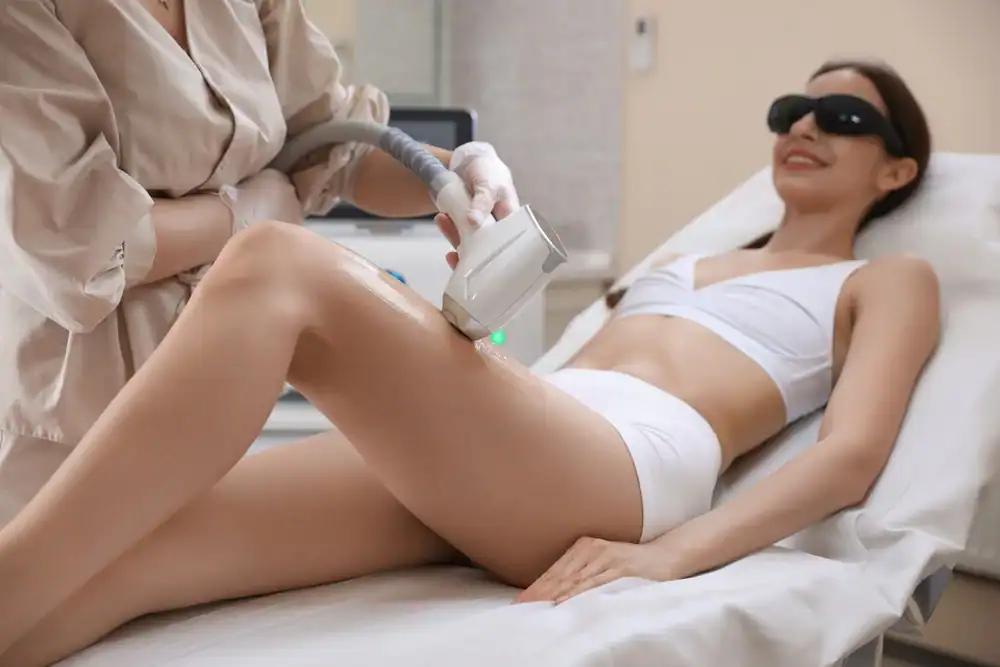
Before your first session, you’ll shave the treatment area. The laser targets the pigment in the hair follicle beneath your skin, so the hair needs to be there—just not visible above the surface. During treatment, you’ll feel a sensation similar to a rubber band snap. Most people tolerate it easily. For sensitive areas, numbing cream is available.
Each session takes anywhere from 10 minutes for small areas like the upper lip to about an hour for full legs. There’s no downtime. You can go right back to work, the gym, whatever’s next on your schedule.
Hair grows in cycles, and the laser only affects follicles in active growth phase. That’s why you’ll need multiple sessions—typically six to eight, spaced four to six weeks apart. After each treatment, you’ll notice less regrowth. By the end of the series, the difference is significant.

Ready to get started?
Our laser hair removal covers virtually any area where you have unwanted hair. Face, underarms, bikini line, legs, back, chest—if it grows there, it can be treated. Each treatment plan is customized based on your hair type, skin tone, and goals.
Brooklyn residents deal with humid summers and the constant need to look put-together in a city that never stops. That means a lot of people here are tired of the daily shave-and-go routine. Laser hair removal fits into that lifestyle because it reduces the ongoing maintenance. You’re not adding appointments to your calendar forever. You’re completing a series, then enjoying the results.
The cost depends on the size of the area being treated. Smaller zones like the upper lip or underarms are less than larger areas like full legs or back. Most people find that when they calculate what they spend annually on razors, shaving cream, waxing appointments, and the time involved, laser hair removal pays for itself within a few years. And the results last significantly longer than any other method.
You’ll also avoid the skin issues that come with constant shaving or waxing—ingrown hairs, razor bumps, irritation. The laser destroys the follicle, so there’s nothing left to grow back incorrectly or cause inflammation.

Most people need six to eight sessions to see significant, long-lasting results. Here’s why: hair grows in three phases—anagen (active growth), catagen (transition), and telogen (resting). The laser only works on hair in the anagen phase, which is about 20-30% of your hair at any given time.
That means each session targets a portion of the hair in the treatment area. The rest is either transitioning or dormant, so it won’t be affected until it enters active growth. Spacing sessions four to six weeks apart allows you to catch more hair as it cycles into the growth phase.
Some areas need more sessions than others. Hormonal areas like the face or bikini line may require additional treatments because hormones can stimulate new hair growth even after the original follicles are treated. Legs, underarms, and back typically respond well within the standard six to eight sessions. We’ll give you a more accurate estimate during your consultation based on your hair type, skin tone, and the area being treated.
Laser hair removal works best on people with dark hair and lighter skin, but advances in technology have made it possible to treat a wider range of skin tones safely. The laser targets melanin (pigment) in the hair follicle. Dark hair has more melanin, which makes it easier for the laser to detect and destroy the follicle.
If you have very light blonde, red, gray, or white hair, the laser may not be as effective because there’s not enough pigment to absorb the light energy. In those cases, other hair removal methods like electrolysis might be a better option.
For darker skin tones, the key is using the right type of laser. Certain wavelengths, like Nd:YAG lasers, are specifically designed to target hair follicles without affecting the surrounding skin’s melanin. This reduces the risk of burns, discoloration, or other complications. We evaluate your skin and hair during the consultation to determine if you’re a good candidate and which laser technology will work best for you.
Laser hair removal is technically classified as “permanent hair reduction,” not complete permanent removal. That’s an important distinction. After a full series of treatments, most people experience a 70-90% reduction in hair growth in the treated area. The hair that does grow back is usually much finer, lighter, and slower-growing than before.
Some hair follicles are destroyed completely and will never produce hair again. Others are damaged enough that they produce significantly weaker hair. A small percentage may recover over time, especially in hormonal areas, which is why some people choose to do occasional maintenance sessions every year or two.
The results are long-lasting and far superior to shaving or waxing, which only remove hair temporarily. You won’t need to shave daily or book waxing appointments every few weeks. For most people, the reduction is dramatic enough that they consider the results permanent for practical purposes. If a few stray hairs appear months or years later, a quick touch-up session usually takes care of it.
The cost depends on the size of the area you’re treating. Small areas like the upper lip, chin, or underarms typically cost less per session than larger areas like full legs, back, or chest. On average, individual sessions can range from around $100 for small zones to $400+ for large areas, but most practices offer package pricing when you purchase multiple sessions upfront.
Since you’ll need six to eight sessions for optimal results, it’s worth looking at the total investment rather than the per-session price. We also offer payment plans to make the cost more manageable.
When you compare laser hair removal to the lifetime cost of shaving or waxing, the numbers shift in favor of laser. The average person spends $5,000 to $7,000 over their lifetime on razors, shaving cream, and waxing appointments. Laser hair removal typically costs less than that total and delivers results that last for years, not days. You’re also saving hours of time that you’d otherwise spend on grooming, which has its own value. During your consultation, you’ll get a clear breakdown of pricing based on the areas you want treated.
Most people describe the sensation as a quick snap, similar to a rubber band flicking against your skin. It’s not painless, but it’s generally well-tolerated and much less uncomfortable than waxing. The level of discomfort varies depending on the area being treated—more sensitive zones like the bikini line or upper lip tend to be more noticeable than arms or legs.
Modern laser systems often include cooling mechanisms that help minimize discomfort during treatment. If you’re concerned about pain, topical numbing cream is available and can be applied before your session. Most treatments are quick enough that even if you feel some discomfort, it’s over before it becomes a real issue.
As for downtime, there isn’t any. You might notice some mild redness or slight swelling in the treated area immediately after, but it typically fades within a few hours. You can return to work, exercise, and your normal routine right away. The main precaution is avoiding sun exposure on the treated area for a few weeks and skipping hot showers or saunas for 24-48 hours post-treatment. That’s it. No recovery period, no taking time off, no disruption to your schedule.
Yes, you can—and should—shave between sessions. In fact, you’ll need to shave the treatment area 24 hours before each appointment so the laser can effectively target the hair follicle beneath the skin. Shaving removes the hair above the surface but leaves the root intact, which is exactly what the laser needs to work.
What you can’t do is wax, pluck, or use depilatory creams between sessions. Those methods remove the entire hair follicle, including the root, which means there’s nothing left for the laser to target. If you remove the follicle, that session becomes ineffective for those hairs, and you’ll have to wait for them to grow back before treating that area again.
Shaving is the only hair removal method that’s compatible with laser treatments because it keeps the follicle in place. Some people worry that shaving will make their hair grow back thicker or darker, but that’s a myth. Shaving only cuts the hair at the surface—it doesn’t affect the follicle or change the hair’s texture or color. So go ahead and shave as needed between your laser sessions. Just skip the wax strips and tweezers until your treatment series is complete.
Other Services we provide in Fort Hamilton