
Exclusive sales on ALL Dermal Fillers & Injectables!
Hear From Our Clients
A reputation built on 350+ client experiences across our premier locations.

Most people who come in for Botox aren’t chasing a dramatic change. They want to stop looking tired when they’re not, stop seeing the tension in their forehead every time they pass a mirror, and feel like their face actually reflects how they feel inside. That’s what a well-placed Botox treatment does it doesn’t erase you, it just removes the noise.
If you’ve spent years squinting against the glare off Jamaica Bay, spending summers out on the water, or dealing with the low-grade stress that comes with living under one of JFK’s busiest flight corridors, your face may be showing it before you’re ready. Crow’s feet, forehead lines, and that persistent crease between your brows aren’t character flaws but they don’t have to be permanent either.
Howard Beach has a median age of 45.5, and the majority of residents here are homeowners who’ve built real lives in this neighborhood. This isn’t a transient crowd. These are people who invest in their homes, their community, and themselves. Botox treatment results that last three to four months fit naturally into that mindset a low-commitment, high-return routine that keeps you looking sharp through every season, from summer on the water to the holidays with family.
Dolce Aesthetics NY was founded by Jennifer DiLandro, a registered nurse practitioner who built this practice around one straightforward idea that aesthetic treatments should be delivered with real medical skill, not just a steady hand and a marketing budget. Every Botox injection at our practice is performed to clinical standards, using only FDA-approved neurotoxins, under the kind of oversight that a dermatologist’s office or a dentist offering injectables on the side simply can’t replicate.
Our Howard Beach location on Cross Bay Boulevard isn’t a satellite office or a pop-up. It’s the flagship Queens location the one that’s been here, on the neighborhood’s main street, serving the people who live here. In a community where reputation matters and word-of-mouth still carries weight, that physical presence counts. From Old Howard Beach to Lindenwood, clients across this ZIP code have trusted Dolce Aesthetics NY because the results speak for themselves and we’re accountable to this community in a way that a Manhattan medspa never could be.
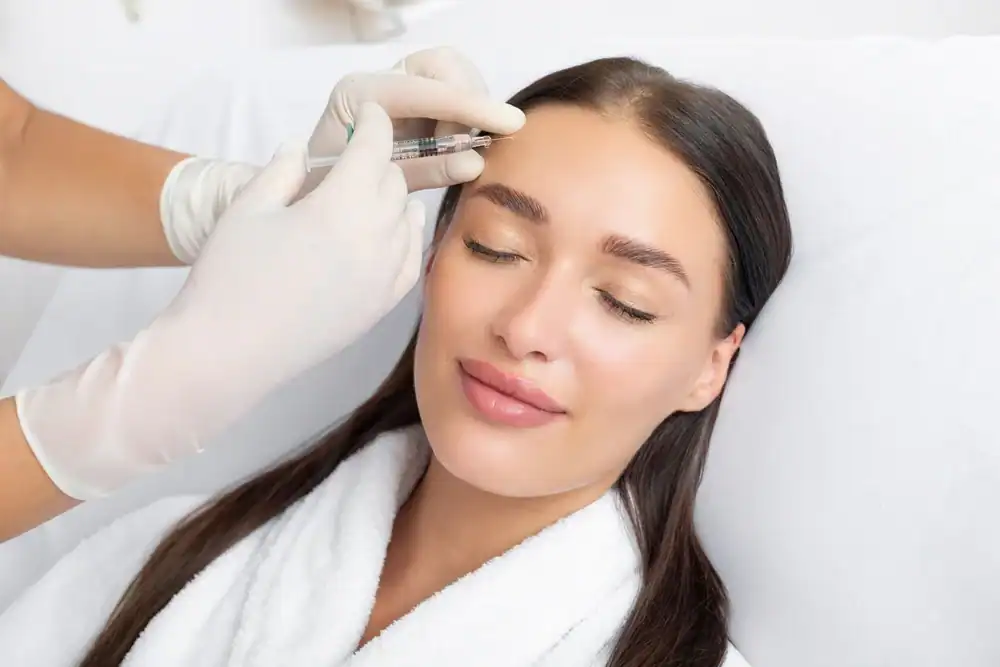
It starts with a consultation a real one, not a five-minute upsell. You’ll talk through what’s bothering you, what you want to address, and what kind of result you’re looking for. Whether that’s smoothing forehead lines, relaxing the frown lines between your brows, treating crow’s feet, or something more targeted like masseter Botox for jaw tension or a lip flip for a subtle upper lip refresh, we build the plan around your face and your goals not a standard package.
From there, the actual injection process is fast. Most appointments take 15 to 30 minutes, with no downtime required. You can come in on your lunch break and head back out onto Cross Bay Boulevard without anyone knowing you had anything done. Results typically begin to show within three to five days, with the full effect settling in around two weeks. Most clients find that results hold for three to four months, at which point a maintenance appointment keeps everything consistent.
New York State requires that Botox injections be administered by or under the direct supervision of a licensed medical professional. At Dolce Aesthetics NY, that standard isn’t a technicality it’s the baseline. Every treatment is performed by a qualified injector with the clinical training to understand facial anatomy, dosing precision, and the difference between a result that looks natural and one that doesn’t.

Ready to get started?
Forehead Botox and the frown lines between the brows are the most common starting points the areas that tend to show stress and age first, and the ones that make the biggest difference when treated well. Crow’s feet around the eyes are a close second, especially for Howard Beach residents who spend real time outdoors near the water, where sun and wind accelerate the lines that form when you squint and smile.
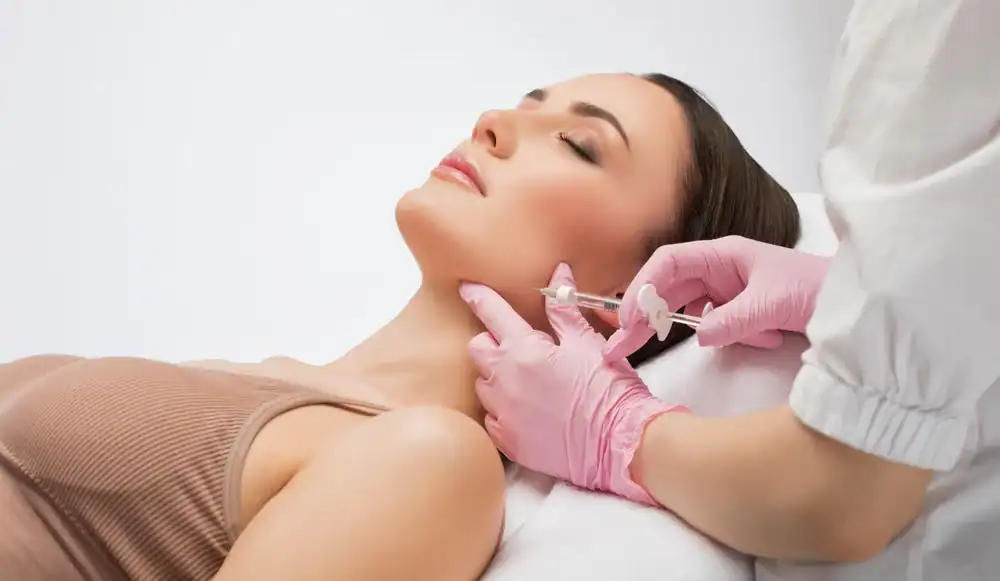
Masseter Botox in Howard Beach, NY has become one of our most requested treatments at this location and it makes sense given the neighborhood. Chronic jaw clenching and teeth grinding (bruxism) are directly tied to long-term stress exposure, and living under the JFK flight path isn’t exactly quiet. Masseter Botox relaxes the large jaw muscles responsible for that grinding, which slims the lower face over time and relieves the jaw tension that builds up without most people even realizing it.
Beyond those, our full treatment menu includes lip flip Botox for a natural upper lip enhancement without filler, jawline Botox and chin Botox for lower face contouring, and anti-aging injections across multiple areas for clients who want a more comprehensive refresh. Every treatment is customized to your facial structure the goal is always a result that looks like you on a good day, not a result that announces itself. If you’re in the 11414 ZIP code and you’ve been thinking about it, we’re already on your street.
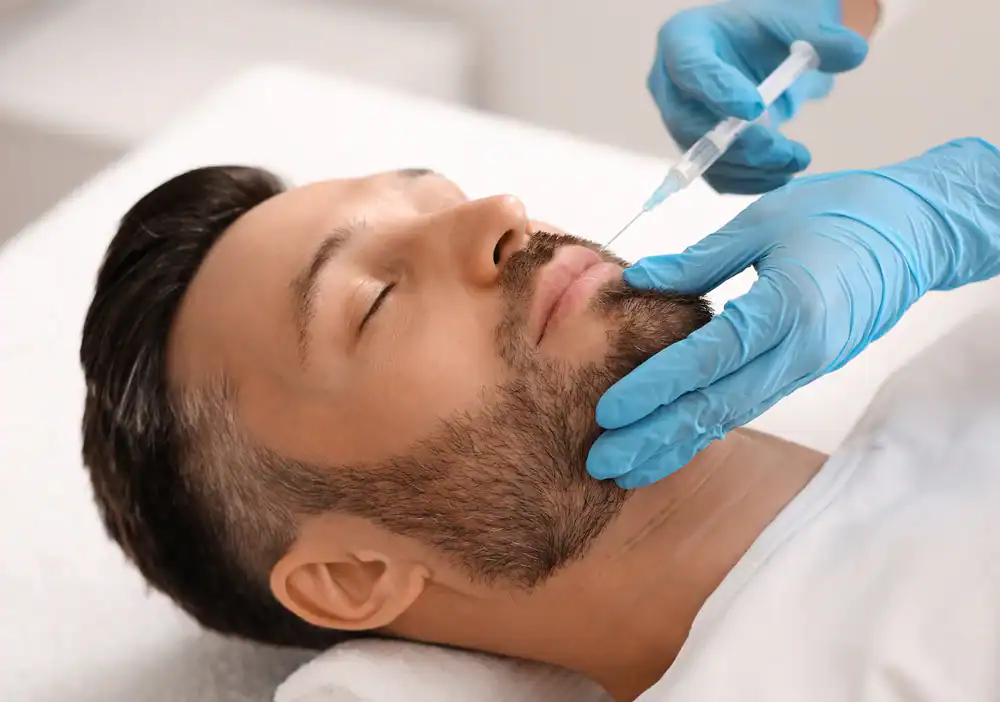
For most people, Botox results last somewhere between three and four months. After that, the treated muscles gradually regain movement and the lines begin to return though many clients notice that with consistent treatment over time, the muscles stay more relaxed and results can stretch a little longer. The general rhythm most clients settle into is three to four appointments per year.
The good news for Howard Beach residents is that scheduling a maintenance appointment doesn’t require a trip into the city or a long commute. We’re right on Cross Bay Boulevard, which means working a 30-minute appointment into your regular routine is genuinely easy. A lot of clients time their appointments around the seasons spring before the waterfront summer kicks in, fall before the holidays, and so on. It’s a simple, predictable schedule that keeps results consistent without taking over your calendar.
Forehead Botox targets the muscles responsible for the horizontal lines across your forehead and the vertical frown lines between your brows the ones that form when you concentrate, squint, or show emotion repeatedly over years. The goal is to soften those lines while keeping your face expressive. A good forehead Botox result doesn’t leave you looking frozen; it just removes the tension that was sitting there permanently.
Masseter Botox works on a completely different muscle group. The masseter is the large jaw muscle that runs along the side of your face, and when it’s overworked from grinding your teeth, clenching your jaw under stress, or just years of tension it can create a wide, heavy jawline and cause real physical discomfort. Masseter Botox in Howard Beach, NY relaxes that muscle, which gradually slims the lower face and relieves the grinding. For anyone who’s been dealing with jaw tightness or waking up with a sore jaw something that’s genuinely common in a neighborhood that sits directly under JFK’s approach path it’s worth a conversation.
Botox is FDA-approved and has a long, well-documented safety record when it’s administered correctly. The key phrase there is “administered correctly.” In New York State, Botox injections must be performed by or under the direct supervision of a licensed medical professional a physician, nurse practitioner, or physician assistant. That’s a legal requirement, not a suggestion.
Where things get complicated is the growing number of providers offering injectables in non-clinical settings beauty salons, wellness studios, or practitioners without the medical training to understand facial anatomy and dosing. At Dolce Aesthetics NY, every injection is performed by a qualified medical injector under the oversight of founder Jennifer DiLandro, a registered nurse practitioner. That means if something unexpected happens an asymmetry, a reaction, a result that needs adjustment you’re working with someone who has the clinical background to address it properly, not just a steady hand with a syringe.
The treatment itself is straightforward. A small number of precisely placed injections are made into the masseter muscle on each side of the jaw. Most clients describe the sensation as a brief pinch it’s not a particularly painful area to treat, and the appointment typically takes 15 to 20 minutes from start to finish. There’s no downtime, no swelling that would make it obvious you had anything done, and no restrictions that would interfere with a normal day.
The results from masseter Botox develop gradually over four to six weeks as the muscle relaxes and begins to reduce in size. The jaw slimming effect becomes more visible over the first couple of months, and the relief from grinding and clenching often starts within the first few weeks. For Howard Beach residents who’ve been dealing with chronic jaw tension whether from stress, noise exposure, or just years of clenching the physical relief alone tends to be worth it, separate from any cosmetic benefit.
Yes, and it’s actually one of the more common combinations. The lip flip uses a small number of Botox units placed along the upper lip to relax the muscle that curls the lip inward, which causes the upper lip to roll slightly outward and appear fuller and more defined. It’s a subtle treatment nothing like filler in terms of volume and it works particularly well for people who feel their upper lip disappears when they smile or who want a little more definition without committing to a more dramatic change.
Combining a lip flip with forehead Botox or crow’s feet treatment in a single appointment is efficient and completely standard. The total appointment time stays short, and treating multiple areas in one visit means you’re not making multiple trips back. For clients at our Howard Beach location who are balancing a busy schedule whether that’s work, family, or just the general pace of life in this neighborhood consolidating treatments into one appointment is a practical approach that most people appreciate.
The most straightforward difference is that we’re physically located in Howard Beach at 161-02 Cross Bay Blvd which means this isn’t a provider serving the area from somewhere else. Our business is embedded in this community, accountable to it, and ranked first on Yelp for Botox near Howard Beach, Queens, NY 11414 as of 2025. That ranking reflects consistent results with real clients who live in this ZIP code, not a paid placement.
Beyond location, the clinical foundation matters. Other Botox options near Howard Beach include a dermatologist’s office and a dentist offering injectables as a secondary service. Dolce Aesthetics NY is a dedicated medical aesthetic practice Botox and injectables aren’t an add-on here, they’re the focus. That specialization, combined with nurse practitioner-level oversight, FDA-approved treatments, and a practice philosophy built around natural-looking results rather than high-volume throughput, is what keeps clients coming back from Old Howard Beach, Lindenwood, Hamilton Beach, and the surrounding neighborhoods quarter after quarter.
Other Services we provide in Howard Beach