
Exclusive sales on ALL Dermal Fillers & Injectables!
The frozen look is out. NYC patients are choosing subtle, refreshed results — and the techniques behind natural-looking Botox have come a long way.
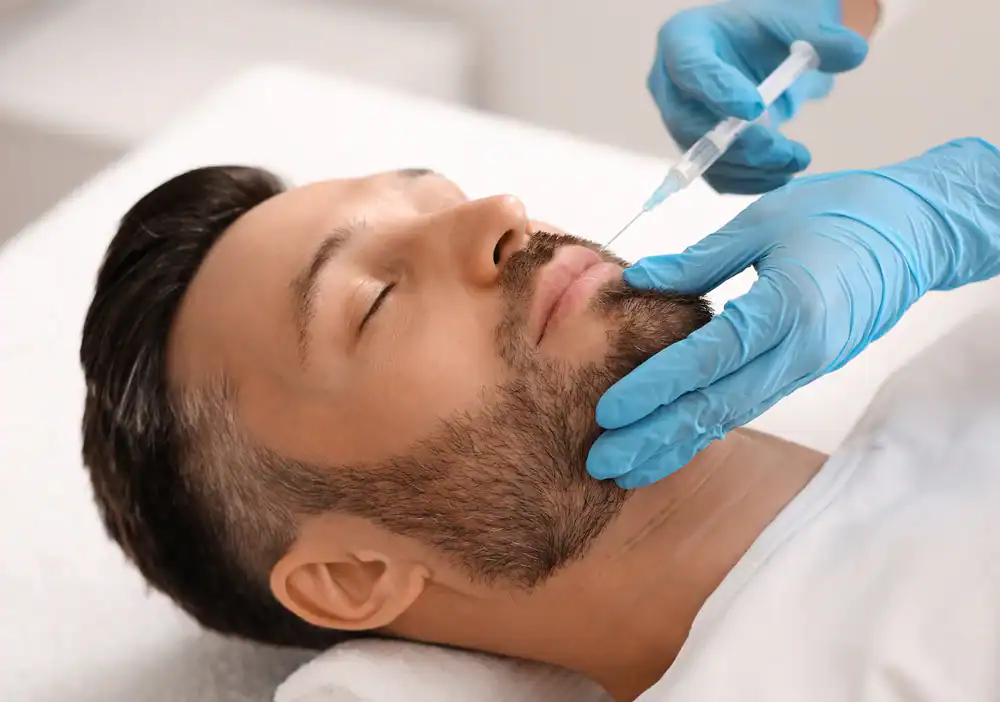
There’s a reason so many people say the same thing when they finally try Botox: “I wish I hadn’t waited so long.” For years, the fear of looking frozen, overdone, or obviously “worked on” kept a lot of New Yorkers on the sidelines. That hesitation made sense — because bad results are real, and in a city where you’re face-to-face with hundreds of people on the subway every single day, the stakes feel higher. But the conversation has shifted. What patients want in 2026 isn’t dramatic transformation. It’s looking rested. Refreshed. Like yourself — just on a good day. Here’s what’s behind that shift, and what it actually takes to get there.
The “frozen face” era of Botox wasn’t inevitable — it was a byproduct of technique. When too much product gets injected into the wrong areas, or when a provider doesn’t account for the way your specific muscles move, the result is that telltale stiffness. You lose the ability to raise your brows naturally, your forehead goes completely flat, and something just looks off — even if no one can quite put their finger on why.
New York City patients have always been discerning. But over the past few years, the demand for subtlety has become explicit. People aren’t coming in asking to eliminate every line. They’re asking to soften the ones that make them look tired or tense — while keeping everything else intact. That’s a fundamentally different goal, and it requires a fundamentally different approach.
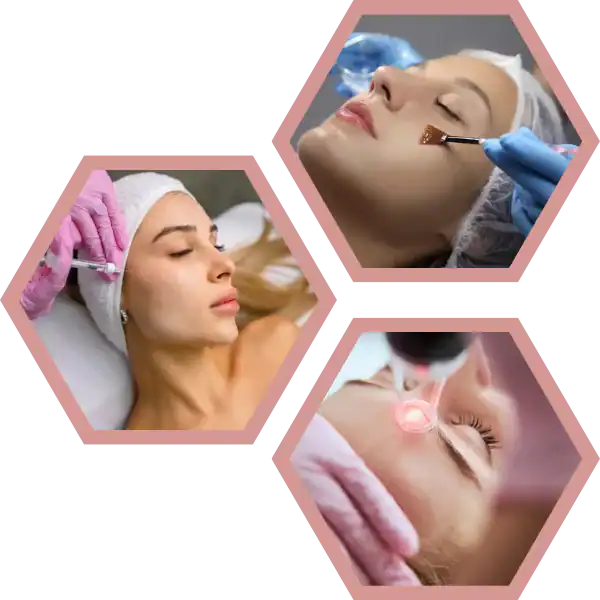
Natural-looking doesn’t mean invisible results. It means results that don’t announce themselves. You still look like you — your expressions are intact, your personality comes through — but the lines that were making you look exhausted or stressed have softened. People notice something is different. They just can’t tell what.
Achieving that requires more than just using less product. It starts with a real assessment of your face — how your muscles move, which areas are dominant, where you hold tension, and what your natural resting expression looks like. Experienced injectors call this facial mapping, and it’s the difference between a result that looks tailored and one that looks generic.
The forehead is a good example. Horizontal forehead lines are one of the most common treatment areas, but the forehead is also one of the easiest places to over-treat. Inject too aggressively, and you flatten the entire upper face. Inject thoughtfully — using the right amount in the right spots — and you soften the lines while keeping the natural lift and movement of the brow. The goal is balance, not elimination.
Crow’s feet treatment follows the same principle. The lines that form at the outer corners of your eyes when you smile are dynamic — they’re caused by muscle movement, not just skin aging. A skilled injector doesn’t try to erase them completely, because doing so would make your smile look unnatural. The aim is to soften them enough that they stop being the first thing you notice in photos, while leaving enough movement that your expressions still read as genuine.
This is also why the consultation matters so much. A provider who skips the assessment and goes straight to the syringe isn’t doing you any favors. Understanding what you actually want — and being honest about what’s realistic — is the foundation of a result you’ll be happy with.
One of the most significant shifts in cosmetic injectables over the past several years is the move toward micro-dosing — sometimes called Baby Botox. Instead of using standard doses across broad areas, smaller amounts are placed more precisely, targeting specific muscle groups without shutting them down entirely. The result is a softening effect that preserves expression and avoids the stiffness that older, heavier-handed techniques produced.
Micro-Botox takes this a step further by placing tiny amounts superficially — just under the skin’s surface — to reduce pore size and improve skin texture without affecting muscle movement at all. It’s a refinement that’s become increasingly popular among patients who want the skin-quality benefits of treatment without any visible change to their expressions.
Preventive Botox is another trend worth understanding, particularly for patients in their mid-to-late twenties. The logic is straightforward: dynamic wrinkles — the kind caused by repeated muscle movement — form over years of making the same expressions. Starting treatment earlier, at lower doses, can slow that process before deep lines have a chance to develop. It’s not about changing how you look now. It’s about giving your future self a head start.
What all of these approaches have in common is customization. There is no universal treatment plan for forehead lines or crow’s feet treatment, because no two faces are the same. Muscle strength varies. Facial structure varies. What looks natural on one person can look overdone on another. The best outcomes come from providers who treat the individual in front of them — not a template.
Facial balancing is the broader principle at work here. Rather than isolating one area and treating it in a vacuum, a thoughtful injector considers how changes in one part of the face affect the overall picture. Relaxing the forehead without addressing the brow position, for example, can create an unintended heaviness around the eyes. Treating areas in context — understanding how they interact — is what separates a result that looks cohesive from one that looks patchy or uneven.
Want live answers?
Connect with a Dolce Aesthetics expert for fast, friendly support.
New York City has no shortage of places offering botox injections. That’s both a good thing and a complicating one. The range of providers — from board-certified dermatologists on the Upper East Side to med spas tucked into strip malls across the outer boroughs — is enormous, and the quality gap between them is just as wide.
The product itself (FDA-approved Botox sourced directly from Allergan) is consistent. What varies is everything surrounding it: the assessment, the technique, the dosing, the follow-up. Choosing a provider is really choosing an injector — their experience, their eye, and their judgment. In New York State, Botox is a prescription medication and a medical procedure. It can only be legally administered by licensed medical professionals, including physicians, nurse practitioners, and physician assistants. That’s the legal floor. What you want is someone operating well above it.
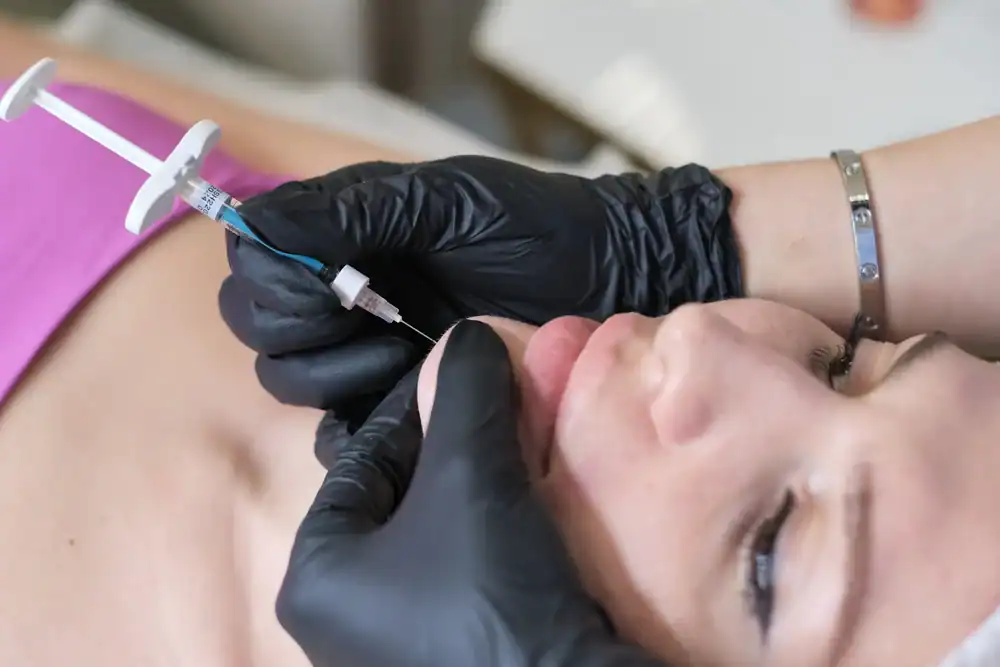
When people end up with results they’re unhappy with — the frozen forehead, the dropped brow, the uneven expression — it’s almost always a technique problem. And technique is a function of training, experience, and the clinical judgment that only comes from doing this work, at a high level, for a long time.
Manufacturer recognition programs exist precisely because this distinction matters. Allergan, the company that makes Botox, maintains a ranking of their top injectors nationwide. Being included in the Allergan Top 250 isn’t a marketing title — it’s a designation awarded by the manufacturer itself, based on clinical volume, skill, and outcomes. Merz Aesthetics, which makes Xeomin and Radiesse, has a parallel program; their Black Diamond status represents the highest tier of recognition they offer. Holding both designations simultaneously is genuinely uncommon, even in a market as competitive as New York City.
At Dolce Aesthetics NY, our founder Jennifer DiLandro holds both the Allergan Top 250 ranking and Merz Aesthetics Black Diamond status — along with Expert Level V injector certification from Allergan, Merz, and PALETTE. She has been performing injectable treatments since 2009, with thousands of Botox treatments completed across her career. Before founding Dolce Aesthetics NY, she served as Director of Nursing at Synergy First Surgical Center in Brooklyn. That clinical background shapes how we approach every patient — not as a transaction, but as a medical assessment.
We also operate with physician oversight on all treatment plans, which is a meaningful distinction. It means every patient is treated within a medically compliant framework, with the safety protocols and professional accountability that come with a genuine medical practice — not a spa that added injectables to its menu.
**Will Botox make me look frozen?** Only if it’s done poorly. The frozen look comes from over-injection — too much product in too large an area, without accounting for how your muscles actually move. When the assessment is thorough and the dosing is precise, you keep your expressions. Lines soften. You don’t lose the ability to look surprised, smile, or squint. The goal is always to look like a rested version of yourself, not a different person.
**How long do results last?** Most patients see results begin to appear within three to five days, with full results visible around the two-week mark. From there, results typically last three to four months, at which point the muscles gradually return to normal movement and lines begin to reappear. There’s no rebound effect — your face simply returns to where it was before treatment.
**How much does Botox cost in New York City?** Pricing varies depending on the provider and the number of units used. As of 2026, the average per-unit price in NYC is around $15, with a typical upper-face treatment — covering the forehead, frown lines, and crow’s feet — generally ranging from $450 to $750. At Dolce Aesthetics NY, we’re transparent about pricing from the start. You know what you’ll pay before anything happens.
**Is there any downtime?** No. Most patients walk out of their appointment and go straight back to their day — whether that’s a meeting in Midtown, a school pickup in Bay Ridge, or an evening out in Glendale. Minor redness or swelling at the injection sites is possible but typically resolves within a few hours. It’s one of the reasons botox injections have become so popular among busy New Yorkers who can’t afford to take days off for recovery.
**What’s the difference between Botox and fillers?** They address different things. Botox (a neuromodulator) relaxes the muscles responsible for dynamic wrinkles — the lines caused by repeated expression. Dermal fillers restore volume to areas that have deflated or hollowed over time. They’re often used together as part of a broader facial balancing plan, but they’re not interchangeable. A good botox consultation will help clarify which approach — or combination — actually makes sense for what you’re dealing with.
**Do I need to see a doctor specifically, or can a nurse practitioner do Botox in New York?** Under New York State law, licensed nurse practitioners are authorized to administer Botox injections, either independently or under physician supervision. What matters is that your provider is licensed, experienced, and operating within a medically compliant framework. Credentials, training history, and the quality of their assessment process are far more meaningful indicators of a good outcome than the specific letters after their name. In NYC, where competition is fierce, the best providers distinguish themselves through transparent communication and a track record of consistent, natural-looking results.
The shift toward subtle, refreshed results isn’t a trend that’s going away. It reflects what patients have always actually wanted — to look like themselves, just better. The techniques exist to deliver that. The question is whether the person holding the syringe has the training, the experience, and the judgment to use them well.
If you’ve been putting this off because you’re worried about looking overdone, that concern is valid — and it’s exactly the kind of thing worth discussing before you commit to anything. A good botox consultation should answer your questions honestly, not just tell you what you want to hear.
We serve patients across Brooklyn and Queens from our locations in Bay Ridge and Glendale. If you’re ready to have that conversation, we’re here for it — no pressure, no sales pitch, just a real assessment of what’s possible for you.
Summary:
Share: