


Exclusive sales on ALL Dermal Fillers & Injectables!

The Latest Laser Treatments for Sun Damage, Fine Lines, and Uneven Skin Tone in NYC

NYC skin takes a beating — sun, stress, pollution. Here's what today's laser treatments can actually do about it, and what to expect from real results.

Beautiful woman receiving facial treatment at Dolce Aesthetics medical spa.

If you’ve spent a summer in Brooklyn or Queens — rooftops, the Rockaways, Coney Island, hours on reflective concrete — you already know what that sun does to your skin over time. Brown spots appear where they didn’t used to. Tone gets patchy. Fine lines settle in faster than expected. And the creams you’ve tried? They help a little, maybe. But they don’t actually fix it.

Laser treatment has come a long way. Today’s options are more targeted, more comfortable, and more effective than most people realize. We cover what’s actually available in NYC, how each approach works, and what you can realistically expect — so you can make a decision that makes sense for your skin.

What Laser Skin Treatment Actually Does — and Why It Works

At its core, laser skin treatment works by delivering concentrated light energy into specific layers of skin. Depending on the wavelength and intensity, that energy can break up pigmentation, stimulate collagen production, resurface damaged skin cells, or do all three at once. The skin responds by repairing itself — and the result, over days or weeks, is clearer tone, smoother texture, and a more even complexion.

What’s changed in recent years is precision. Older laser systems were broad and aggressive — effective, but hard on the skin. Newer platforms let us dial in the exact wavelength, depth, and energy level needed for a specific concern on a specific skin type. That matters a lot, especially in New York, where the range of skin tones walking through the door is about as wide as it gets.

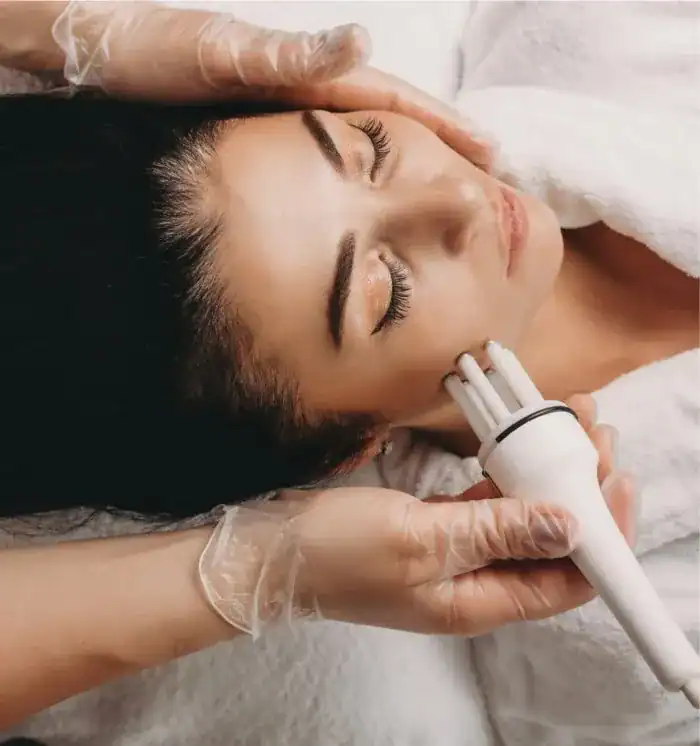
Woman receiving laser skin treatment for facial rejuvenation at Dolce Aesthetics.

Which Laser Treatment Is Right for Sun Damage and Brown Spots?

Sun damage shows up differently on different people. For some it’s scattered brown spots across the cheeks and forehead. For others it’s a general dullness, redness, or uneven tone that’s hard to describe but impossible to ignore in photos. The right laser treatment depends on what’s actually happening in your skin — not just what it looks like on the surface.

IPL, or Intense Pulsed Light, is one of the most effective tools for addressing sun damage, broken capillaries, redness, and brown spots in a single session. It works by sending broad-spectrum light into the skin, which is absorbed by pigmented and vascular targets. Those targets break down and are gradually cleared by the body. A clinical study published in April 2024 confirmed that IPL is both effective and safe for treating pigmented lesions while also stimulating collagen production — so you’re addressing visible damage and supporting long-term skin health at the same time.

For patients with melasma or deeper, more stubborn hyperpigmentation, IPL alone may not be the right call. Melasma is notoriously tricky because it lives in the deeper layers of the skin and can actually worsen with treatments that trigger inflammation. That’s where LaseMD comes in. LaseMD uses a 1927nm thulium fiber laser to target pigmentation in the deeper skin layers without disrupting the surface. No peeling, no raw skin, no inflammatory response that could make things worse. For patients who’ve tried other treatments and been disappointed — or told their melasma is untreatable — this is often the option that finally moves the needle.

One thing worth knowing about LaseMD: the microchannels it creates in the skin temporarily allow active ingredients to penetrate much deeper than they normally could. That means your serums and treatments actually work better in the days following a session. It’s a detail most people don’t expect, but it extends the value of the treatment beyond what happens in the room.

How Laser Treatment Helps with Fine Lines, Acne Scars, and Skin Resurfacing

Fine lines and acne scars share a common underlying issue: the skin’s collagen structure has been disrupted or depleted. Laser skin resurfacing works by triggering the body’s natural collagen remodeling process — essentially prompting the skin to rebuild itself from the inside out. The results don’t happen overnight, but they tend to be durable in a way that topical treatments simply can’t match.

For fine lines around the eyes, forehead, and mouth, a series of non-ablative laser sessions can produce meaningful improvement over 3 to 6 months. Collagen remodeling is a gradual process, which means the skin that looks good at week four often looks even better at month six. For acne scars, the timeline and number of sessions varies depending on depth and type, but most patients see significant improvement after three to six treatments spaced several weeks apart.

The Carbon Laser Facial is worth mentioning here too — particularly for patients who want visible results without any downtime at all. A carbon lotion is applied to the skin, then a laser passes over it, destroying the carbon particles along with dead skin cells, blackheads, and surface congestion. The result is softer skin, visibly reduced pores, and a brightness that’s hard to get from anything else. It’s painless, takes about 30 minutes, and you can walk out and go straight back to your day. For working New Yorkers who can’t afford to look red or raw for a week, that matters.

Want live answers?

Connect with a Dolce Aesthetics expert for fast, friendly support.

Laser Treatment in NYC: What to Expect Before, During, and After

One of the most common reasons people put off laser treatment is uncertainty about the experience itself. What does it feel like? How long will you look different? When do results show up? These are reasonable questions, and the honest answers are less intimidating than most people expect.

The experience varies by treatment type, but across the board, modern laser systems are significantly more comfortable than they were even five years ago. Integrated cooling systems, shorter pulse durations, and better energy calibration have changed the picture considerably. Most patients describe IPL and non-ablative laser sessions as a mild warmth or a light snapping sensation — not the dramatic discomfort that older laser systems were known for.

Professional medical spa treatment at Dolce Aesthetics in Alley Pond Park, NY.

Recovery Time for Laser Treatments: What's Realistic for a Busy NYC Schedule?

Recovery depends entirely on which treatment you’re getting. That’s not a dodge — it’s genuinely the most important variable. A Carbon Laser Facial has zero downtime. You can have one on your lunch break and return to your afternoon with no visible sign that anything happened. LaseMD typically involves one to three days of mild redness and some light flaking, but nothing that requires you to hide indoors. IPL photo facials may leave the skin slightly flushed for a day, and treated brown spots often darken briefly before they shed — a normal part of the process that fades within a week or two.

More intensive resurfacing treatments, like ablative CO2 laser, involve a more significant recovery — up to two weeks for full surface healing. These are powerful options for deep wrinkles or significant textural damage, but they require planning and a realistic window for recovery. They’re not the right fit for every patient or every schedule, and we’ll tell you that upfront rather than downplaying it.

This is also where timing matters in NYC specifically. The fall and winter months — October through March — are the optimal window for more intensive laser resurfacing, because lower UV exposure reduces the risk of post-treatment hyperpigmentation. If you’re thinking about addressing sun damage from this past summer, the timing right now is actually ideal. Many of our patients in Brooklyn and Queens plan their treatment series in the fall so their skin is at its best heading into the new year.

For darker skin tones, the conversation around recovery and risk is slightly different and worth addressing directly. Certain laser wavelengths carry a higher risk of hyperpigmentation or hypopigmentation in patients with more melanin. The solution isn’t to avoid laser treatment — it’s to use the right laser. Our Cynosure Apogee Elite operates on two wavelengths: 755nm Alexandrite for lighter skin tones and 1064nm Nd:YAG specifically designed for darker skin tones. In one of the most ethnically diverse cities in the world, that dual-wavelength capability isn’t a nice-to-have — it’s essential.

Frequently Asked Questions About Laser Treatment in NYC

People come in with a lot of questions, and most of them are variations on the same core concerns. Here are the ones we hear most often, answered plainly.

How many sessions will I need? It depends on what you’re treating. Mild pigmentation and sun damage typically respond in two to three sessions. Acne scars usually require three to six. Fine lines treated with non-ablative laser often show the best results after a series of four to six sessions spaced several weeks apart. During your consultation, we’ll give you a realistic number based on your specific skin — not a generic estimate.

Is laser treatment safe for darker skin? Yes — when the right laser is used. This is one of the most common misconceptions we encounter, and it keeps a lot of people from getting treatment that could genuinely help them. In Brooklyn and Queens, where our patients come from dozens of ethnic backgrounds and skin tones, this question comes up constantly. The 1064nm Nd:YAG wavelength on our Cynosure Apogee Elite was developed specifically for darker skin types and is clinically proven safe across Fitzpatrick Types IV through VI. We’ve treated thousands of patients across NYC with excellent results and zero complications.

Will it hurt? Most patients are surprised by how manageable it is. The Cynosure system has a built-in cryo-cooling mechanism that significantly reduces discomfort during treatment. Carbon Laser Facials are completely painless. IPL and LaseMD sessions involve mild warmth and occasional light snapping — nothing that requires numbing cream or recovery time from the sensation itself.

Is summer a bad time to start? For more intensive resurfacing treatments, yes — we’d recommend waiting until fall. For no-downtime options like the Carbon Laser Facial or LaseMD, treatment is possible year-round with proper sun protection. NYC summers are intense, and the UV exposure from a day at the Rockaways or an afternoon on a rooftop in Williamsburg can undo results if you’re not protecting your skin carefully post-treatment. We’ll walk you through exactly what that looks like during your consultation.

How long do results last? Removed sun spots and brown spots don’t automatically return — but new UV damage can create new spots over time. Collagen remodeling results from resurfacing treatments can last several years with proper maintenance and sun protection. Most patients come back for a maintenance session once or twice a year to keep results consistent.

Ready to Start Laser Treatment in NYC? Here's What to Do Next

The technology available today is genuinely different from what it was even a few years ago. Whether you’re dealing with sun damage from years of NYC summers, melasma that hasn’t responded to anything else, fine lines that are starting to bother you, or skin texture that just feels off — there’s a laser treatment approach that’s designed for exactly that concern, on your skin type, with a recovery window that fits your life.

What matters most is starting with an honest conversation about what you’re actually dealing with and what results are realistic. That’s what the consultation is for — no pressure, no commitment, just a clear picture of your options and what to expect.

If you’re in Brooklyn or Queens and ready to find out what your skin can look like, reach out to us at Dolce Aesthetics NY. We’ll take it from there.

Summary:

If you’ve been dealing with brown spots, uneven tone, or fine lines that no cream seems to touch, you’re not out of options — you’re just not using the right tool yet. This page breaks down the latest laser treatments available in NYC, how each one works, what kind of results are realistic, and how to figure out which approach fits your skin and your schedule. Understanding the difference between treatment types isn’t just useful — it could be the reason your next treatment finally works where others haven’t.

Article details:

Share: