
Exclusive sales on ALL Dermal Fillers & Injectables!
Not sure whether a chemical peel or laser treatment is right for your skin? Here's an honest breakdown of what each actually does — and when one wins over the other.

You’ve done the research. You’ve read the forums. You’ve watched the before-and-afters. And you’re still not totally sure whether you need a chemical peel or a laser treatment — because the more you look into it, the more the two seem to blur together.
That confusion is understandable. Both treatments resurface the skin, both address similar concerns, and both get results. But they work differently, they’re better suited for different situations, and choosing the wrong one doesn’t just waste money — it can set your skin back. This page is here to cut through the noise and give you a straight answer, based on what your skin is actually dealing with.
At their core, both treatments do the same thing: they remove damaged outer layers of skin to reveal newer, smoother skin underneath. The difference is in how they get there.
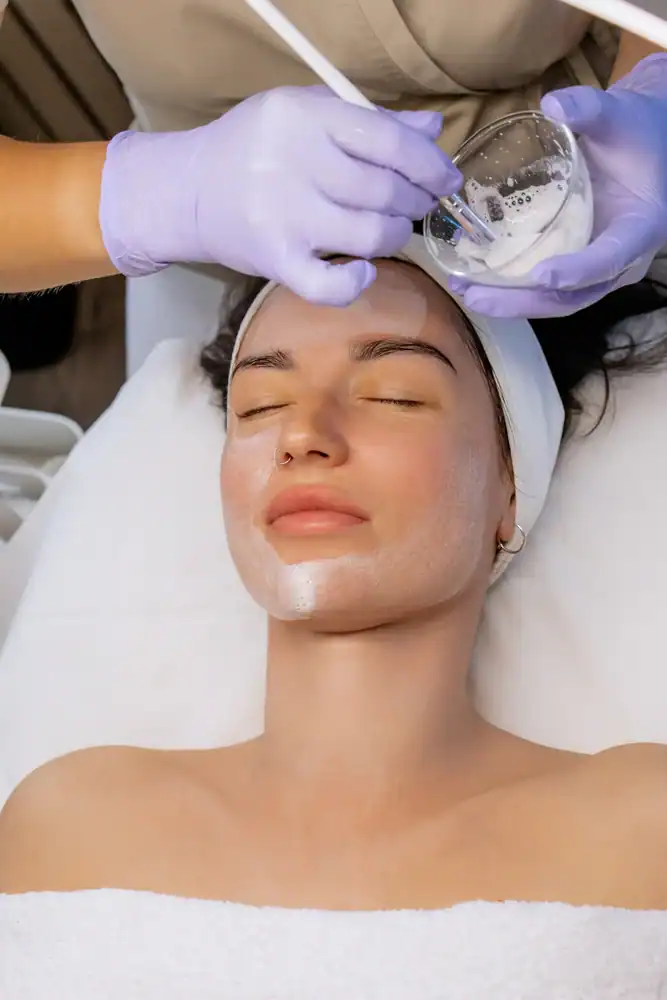
A chemical peel uses an acid solution — glycolic, lactic, salicylic, TCA, or others — applied directly to the skin. The acid breaks down the bonds between dead and damaged skin cells, prompting the skin to shed and regenerate. Depending on the depth of the peel, this process affects just the outermost layer or reaches into the mid-layers of the skin.
Laser skin resurfacing uses concentrated light energy to create controlled damage in the skin. The body responds by producing new collagen and rebuilding smoother tissue. Ablative lasers remove the outer skin layer entirely; non-ablative lasers work beneath the surface without removing skin. The depth and precision of a laser can be dialed in more specifically than a chemical peel, which is why lasers tend to be the go-to for deeper structural concerns.

This is the question most people are really asking. And the honest answer is: it depends on the type of scarring you’re dealing with.
For post-acne hyperpigmentation — those flat, dark marks left behind after a breakout — chemical peels are often the smarter first step. A well-chosen peel can fade discoloration, smooth mild surface irregularities, and brighten overall skin tone with minimal downtime. A series of medium-depth TCA peels, for example, can make a meaningful difference in skin texture and pigmentation over the course of a few months. Most clients start seeing real improvement after two or three sessions spaced about four weeks apart.
For deeper, structural acne scars — ice pick scars, boxcar scars, rolling scars — laser resurfacing has the edge. Fractional CO2 lasers can reach into the dermis and trigger collagen remodeling at a depth that chemical peels simply can’t match. The precision of laser energy allows a provider to target specific scar types and depths without affecting surrounding tissue. That level of control is what makes laser the preferred tool for scars that have texture you can feel, not just color you can see.
That said, the two aren’t mutually exclusive. A lot of clients with moderate acne scarring benefit from a combination approach — starting with laser to address the structural damage, then using a series of lighter peels to maintain the results and manage ongoing pigmentation. The key is having a provider who offers both and can map out a plan that makes sense for your skin specifically, rather than defaulting to whatever they happen to specialize in.
One more thing worth saying plainly: the results from either treatment depend heavily on the skill and experience of the person performing it. This is especially true for anyone with a medium-to-deep skin tone. Both chemical peels and laser treatments carry a real risk of post-inflammatory hyperpigmentation when applied incorrectly on Fitzpatrick types IV through VI. That’s not a reason to avoid treatment — it’s a reason to choose your provider carefully.
Skin texture improvement isn’t just about acne scars. A lot of people come in dealing with sun damage, melasma, blotchy pigmentation, or the kind of fine lines that make skin look older than it should. Each of those concerns responds a little differently to peels versus laser.
For sun damage and uneven skin tone, chemical peels are consistently effective. Glycolic and lactic acid peels work well for general brightening and mild sun spots. TCA peels go deeper and can address more stubborn discoloration. The skin cell turnover that a peel triggers is exactly what’s needed to push pigmented, damaged cells out and let fresher skin come through. Results build over a series of treatments, and maintenance peels — especially in the fall and winter when UV exposure is lower — help keep the skin looking even year-round.
For melasma specifically, the picture is more complicated. Melasma is a hormonal condition, and it can actually be worsened by heat — which means aggressive laser treatments can sometimes make it worse, not better. Superficial chemical peels with the right formulation are generally the safer approach for melasma, particularly for clients with deeper skin tones who are already at higher risk for pigmentation changes.
For fine lines and skin laxity, laser tends to have the advantage. Non-ablative lasers stimulate collagen production beneath the surface without the visible peeling and recovery of a chemical peel. Fractional CO2 and similar technologies can produce noticeable tightening and smoothing that a chemical peel can’t replicate on its own. For clients whose primary concern is fine lines around the eyes or mouth, or overall loss of firmness, laser is usually the more efficient path.
That said, light chemical peels remain an excellent maintenance option between laser sessions. They keep the skin’s surface smooth, support ongoing collagen production, and can extend the life of your laser results without requiring additional downtime. Think of them less as competitors and more as tools that work well in sequence.
Want live answers?
Connect with a Dolce Aesthetics expert for fast, friendly support.
Living in New York City adds a layer to this decision that most skincare guides don’t account for. Your skin isn’t operating in a neutral environment. Daily subway commutes expose you to fine metal particles and exhaust. Urban pollution accelerates oxidative damage and worsens hyperpigmentation. The city’s brutal winters dry out and dull the skin; the summers bring intense UV that complicates recovery from more aggressive treatments.
All of that matters when deciding which treatment to pursue and when. Fall and early winter are typically the best window for medium-depth peels and more intensive laser work in NYC — UV exposure drops, recovery is easier, and you’re heading into the season when your skin needs the most help anyway. Lighter peels and non-ablative laser options can be done year-round with proper sun protection.

This part matters more than most people realize. In 2024, inspections found that 26% of med spas in New York had expired credentials. The NYC Council has publicly called out practices that are openly ignoring licensing laws and putting clients at risk. That’s not a small problem — and it’s especially relevant for chemical peels and laser treatments, where the wrong depth, wrong formulation, or wrong technique can cause burns, scarring, or hyperpigmentation that’s harder to treat than the original concern.
What you’re looking for is real medical oversight, not just a name on a wall. Your treatment plan should be reviewed by a licensed nurse practitioner or physician who is actively involved in your care — not a “paper” medical director who signed an agreement and never shows up. The person performing your treatment should have documented experience with your specific skin type and concern, and they should be able to explain exactly what they’re using and why.
At Dolce Aesthetics NY, every treatment plan is supervised by doctors and nurse practitioners who are licensed to treat patients if any issues arise. Our founder, Jennifer DiLandro, is a nurse practitioner with 18 years of clinical experience — including her time as Director of Nursing at Synergy First Surgical Center in Brooklyn. We built this practice around the same standard of care held in a surgical setting, and that standard hasn’t changed.
We also work with a genuinely diverse patient population across our Brooklyn, Queens, Glendale, and Howard Beach locations. That means we have real, hands-on experience treating a wide range of skin tones and types — not just in theory, but in practice, every day. For clients with medium-to-deep skin tones who have been burned before by providers who weren’t equipped to treat them, that experience is the difference between a good outcome and a setback.
**How much downtime should I expect?** Light chemical peels typically involve one to three days of mild flaking — most people go back to work the same day or the next. Medium peels can mean five to seven days of more visible peeling. Laser treatments vary widely: non-ablative options have minimal downtime, while ablative fractional CO2 treatments may require a week or more of recovery. For busy New Yorkers juggling work, commutes, and packed schedules, this is often the deciding factor. Many of our clients in Bay Ridge, Howard Beach, and Glendale appreciate that a light peel fits into a lunch break without disrupting the rest of their week.
**Is a chemical peel or laser safer for darker skin tones?** Both can be safe — and both can cause problems if performed by someone without the right experience. Post-inflammatory hyperpigmentation is a real risk for Fitzpatrick skin types IV through VI with either treatment. The key is working with a provider who knows how to select the right peel depth or laser setting for your skin tone, and who has actually treated patients who look like you. In New York City, where you have access to providers with genuine experience across diverse skin types, this shouldn’t be hard to find — but it’s still worth asking directly before you book.
**How many sessions will I need to see real results?** For chemical peels, most clients see meaningful improvement after two to three sessions, with optimal results typically reached after a series of four to six treatments spaced about four weeks apart. Laser treatments often deliver more dramatic results in fewer sessions, but individual response varies. The honest answer is that neither treatment is a one-and-done fix — both work best as part of a longer-term skin care plan.
**Can I combine chemical peels and laser treatments?** Yes, and in many cases it’s the smartest approach. A fractional CO2 laser might address deeper scarring first, and then a series of lighter peels can maintain the results and manage pigmentation over time. The two treatments complement each other well when timed correctly. We map this out during a consultation — there’s no universal protocol, and the right sequence depends entirely on your skin’s starting point and your goals.
**What’s the difference between a med spa and a dermatologist for these treatments?** A board-certified dermatologist has a medical degree and can prescribe medications, diagnose conditions, and perform more invasive procedures. A reputable med spa, operating under proper medical supervision, can offer many of the same skin rejuvenation treatments in a setting that’s often more accessible and more affordable. The critical question isn’t the label — it’s whether there’s real medical oversight behind the treatments being offered.
There’s no universal answer to the chemical peel versus laser debate — and anyone who tells you otherwise without looking at your skin first isn’t giving you real advice. The right choice depends on what you’re treating, how deep the concern goes, your skin tone, your tolerance for downtime, and your long-term goals.
What is consistent: both treatments work, both require a skilled hand, and both deliver better results when they’re part of a plan rather than a one-time experiment. The clients who see the most meaningful change are the ones who come in with realistic expectations, get honest guidance, and commit to a process.
If you’re somewhere in Brooklyn, Queens, or the surrounding neighborhoods and you’ve been sitting on this decision, the easiest next step is a consultation — no commitment, no pressure, just a real conversation about your skin. We offer free consultations at all of our locations, and we’ll tell you exactly what we think will work and why, before you spend a dollar.
Summary:
Share: