
Exclusive sales on ALL Dermal Fillers & Injectables!

Why Combining Modern Facials And Preventive Botox Is The Go-To Look In Brooklyn And Queens, NY

More Brooklyn and Queens residents are skipping the single-treatment approach. Here is why combining preventive Botox with professional facials is quickly becoming the smarter move for long-term skin health.

A woman gets a radiofrequency skin treatment on her neck at a clinic, technician in black gloves.

There is a certain look quietly spreading through Brooklyn and Queens: not overdone, not frozen, just genuinely good skin. It is the kind where people cannot quite put their finger on why you look so well-rested. The secret is not one treatment doing all the work. It is two treatments handling what the other cannot. Preventive Botox handles what happens under the surface. A professional facial handles everything on top of it. Together, they cover the full picture in a way that neither treatment can manage alone. If you have been wondering if it is time to try one or both, this is worth a read.

What Preventive Botox Does And Why Brooklyn And Queens Residents Start Earlier

Botox has a reputation problem. For a long time, people associated it with correcting damage, something you did after the lines were already there. That thinking has shifted significantly. Right here in Brooklyn and Queens, a younger wave of clients in their mid-to-late 20s and 30s approaches Botox the same way they approach SPF: as a proactive investment rather than a last resort.

Preventive Botox, sometimes called baby Botox, works by relaxing the specific facial muscles that create expression lines before those lines have a chance to set in permanently. When you raise your eyebrows or squint on a bright day, your muscles contract and fold the skin above them. Do that thousands of times over years, and those folds eventually become creases that do not go away when your face is at rest. Small, precise doses of Botox interrupt that cycle early, so the lines never fully develop in the first place.

Is Preventive Botox Worth It In Your 20s Or 30s?

This is the question we hear most often from first-time clients, and it is a fair one. The honest answer is that it depends on your skin, your genetics, and your goals. That is why a consultation matters more than any general rule of thumb.

Data shows that this trend is no longer niche. Over 9 million Botox treatments were performed worldwide in 2024, representing a 26.1% increase from 2021. Millennials and older Gen Z adults rank among the fastest-growing segments of Botox patients, driven by prevention rather than correction. The idea, often called prejuvenation, is simply that maintaining smooth skin is easier than reversing lines that have already formed.

For Brooklyn and Queens residents specifically, an added layer of context exists. Life here involves a lot of face time. Long commutes, video calls, client-facing work, and a dense social culture mean your face is always on. The subtle, sustained muscle tension that builds up over years of commuting, squinting in bright subway lights, or staring at screens adds up faster than most people realize.

The good news is that preventive Botox does not require large amounts of product or dramatic changes to your appearance. The goal is not to freeze anything; it is to soften the repetitive muscle activity that would otherwise etch lines into your skin. At $10 to $15 per unit, with treatments typically taking about 10 minutes, it remains one of the more accessible medical aesthetic treatments available in the boroughs. Most clients walk out and go straight back to work.

One thing deserves to be said plainly: if you are in your mid-20s and your skin still looks great, you may not need Botox yet. A qualified provider should tell you that honestly. A consultation can provide a baseline so that when the time arrives, you are not starting from scratch.

How To Tell If You Are A Candidate For Preventive Botox

The clearest sign that preventive Botox makes sense is when you start noticing lines that linger after your face relaxes. If you smile, relax your face, and the lines around your eyes or mouth stay visible, those are early static lines forming. That is the window where preventive treatment proves most effective.

Other indicators include a family history of early wrinkling, significant sun exposure over the years, or a naturally expressive face with strong muscle activity. None of these are problems; they are simply factors that influence how quickly lines develop and how much a small amount of Botox can slow that process.

Simply being young and curious does not make you a candidate. Botox is a medical procedure, and in New York, it must be performed by a licensed physician, nurse practitioner, or physician assistant. That is not a bureaucratic detail, it matters. A provider with real clinical training will assess your facial anatomy, ask about your health history, and check for contraindications before recommending anything. If a provider skips that step, that is a problem regardless of how good the price looks.

Botox is also temporary. Results typically last three to four months, meaning your first treatment is a low-stakes way to observe how your face responds. If you love it, you maintain it. If you are unsure, it wears off. For most first-time clients, that built-in reversibility makes the decision feel far less permanent than expected going in.

Want live answers?

Connect with a Dolce Aesthetics expert for fast, friendly support.

Why Professional Facials And Botox Work Better Together

Most people do not hear this when researching Botox: it does nothing for your skin’s surface. Botox works at the muscle level, reducing the contractions that create wrinkles. However, skin texture, tone, hydration, dullness, enlarged pores, and uneven pigmentation are not touched by Botox alone.

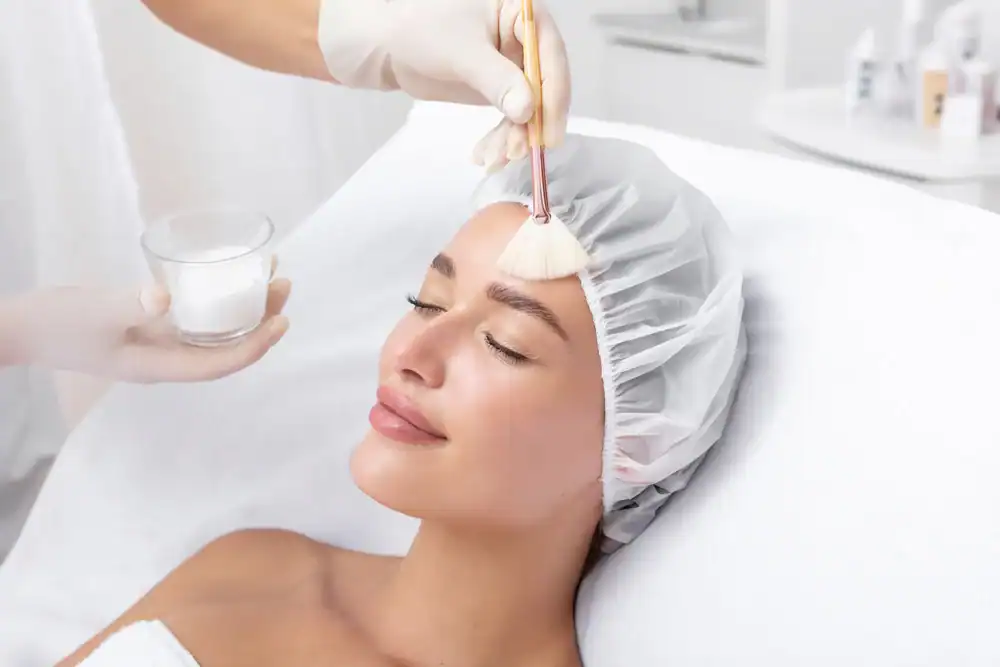
That is where professional facials enter the picture. A medical-grade facial addresses the surface layer by clearing congestion, stimulating cellular turnover, improving hydration, and evening out tone. Pairing that with Botox covers both dimensions of how skin ages: the structural and the surface. The result looks more complete, appears more natural, and tends to hold up better over time.

What A Medical Facial Does That A Regular Facial Cannot

Not all facials are the same, and the difference matters. A standard spa facial focuses primarily on relaxation and surface cleansing. A medical-grade facial, performed at a licensed medical spa, uses clinical-strength products and techniques that penetrate deeper and produce more meaningful results for skin health.

Treatments like chemical peels, LaseMD resurfacing, and professional skin rejuvenation protocols work at a cellular level. They accelerate turnover, address sun damage, and improve the structural quality of the skin over time. These results cannot be achieved from a hydrating mask at a nail salon. They require trained hands, proper assessment, and the right products for your specific skin type.

This distinction is especially relevant in Brooklyn and Queens, where the population is among the most ethnically diverse in the world. Skin of color responds differently to certain treatments, and a provider lacking experience across a wide range of skin tones can cause more harm than good. Darker skin tones require specific protocols to avoid hyperpigmentation, and a medical spa with genuine clinical depth, rather than just a menu of trendy services, will know the difference.

When you combine a well-executed medical facial with a Botox treatment plan, the results compound over time. The Botox prevents the muscular causes of new lines from developing, while the facials keep the skin itself in better condition: more hydrated, even, and resilient. Clients who maintain both treatments consistently tend to look progressively better over the months and years, rather than just temporarily refreshed after each appointment.

The combination also supports each treatment’s longevity. Well-hydrated, healthy skin holds Botox results better. When the surface of your skin is clear and even, the subtle improvements from Botox become more visible. They reinforce each other in a way neither treatment achieves in isolation.

How To Choose A Botox And Facial Provider In Brooklyn Or Queens

This is where many people get stuck, and spending time here is worthwhile because the provider genuinely matters more than the setting, price, or branding.

In New York, Botox is legally classified as a medical procedure, meaning it must be performed by a licensed physician, nurse practitioner, or physician assistant. That rules out estheticians and medical assistants, regardless of any training they claim. If you are unsure who will hold the needle, ask directly before booking.

Beyond licensure, look for specific, verifiable credentials. National rankings from companies like Allergan (the manufacturer of Botox Cosmetic) exist precisely to help patients identify providers who have demonstrated exceptional skill and volume. An Allergan Top 250 ranking, for instance, is not a self-applied marketing badge; it is a criteria-based designation from the pharmaceutical company itself. The same applies to Merz Black Diamond status for providers working with Merz Aesthetics products.

Price serves as another signal to monitor in both directions. Botox that seems unusually cheap should raise a question. In April 2024, the FDA issued an alert about counterfeit Botox found in multiple U.S. states. Neuromodulators are expensive for providers to purchase through legitimate channels, meaning an overly low price often reflects a corner cut somewhere in the supply chain. At $10 to $15 per unit from a credentialed provider, you are paying for the real product administered correctly.

For Brooklyn and Queens residents, convenience is another practical factor. A provider located in the borough, rather than across the bridge in Manhattan, allows you to realistically maintain your treatment schedule every three to four months without complication. Proximity matters more than most realize when shopping around.

Finally, look for a free consultation with no upfront payment commitment. A provider confident in their results and invested in the right outcome for you should be willing to converse first. That initial visit should involve a real assessment of your skin, an honest conversation about your goals, and clear information about what treatment makes sense. If a provider skips straight to booking a procedure, that is a red flag.

Ready To Try Botox And Facials In Brooklyn Or Queens? Here Is Where To Start

The combination of preventive Botox and professional facials is not a trend chasing the next big thing in aesthetics. It is a straightforward response to how skin ages and a smarter approach than waiting until more damage requires correction. Brooklyn and Queens residents have real options close to home, without Manhattan prices or commutes.

If you have been on the fence about Botox, or if you have been doing facials and feel your results have plateaued, a conversation with a qualified provider is the most useful next step. We offer a free consultation at every first visit at Dolce Aesthetics NY. No payment is taken until you have a plan you feel comfortable with. That provides a reasonable place to start.

Summary:

If you have been doing facials religiously and still feel like something is missing, or if you have been curious about Botox and are not sure it is right for you yet, you are not alone. A growing number of people in Brooklyn and Queens are discovering that these two treatments work better together than either does on its own. This post breaks down why the combination works, what the science reveals, and what to look for in a provider before you book anything. By the end, you will have a clear picture of if this approach makes sense for where you are right now.

Article details:

Share: