

Exclusive sales on ALL Dermal Fillers & Injectables!
Trying to decide between a HydraFacial and a traditional facial? Here's what actually sets them apart — and how to choose based on your skin.
You’ve probably seen HydraFacial everywhere lately — on social media, in spa menus, maybe even recommended by a friend who came home glowing. And you’re wondering: is it actually different from a regular facial, or is it just a fancier name with a higher price tag?
That’s a fair question. The answer matters — especially if you’re spending your time and money on a treatment that you want to actually work. This page breaks down what each option delivers, where they differ, and how to figure out which one makes sense for your skin right now.
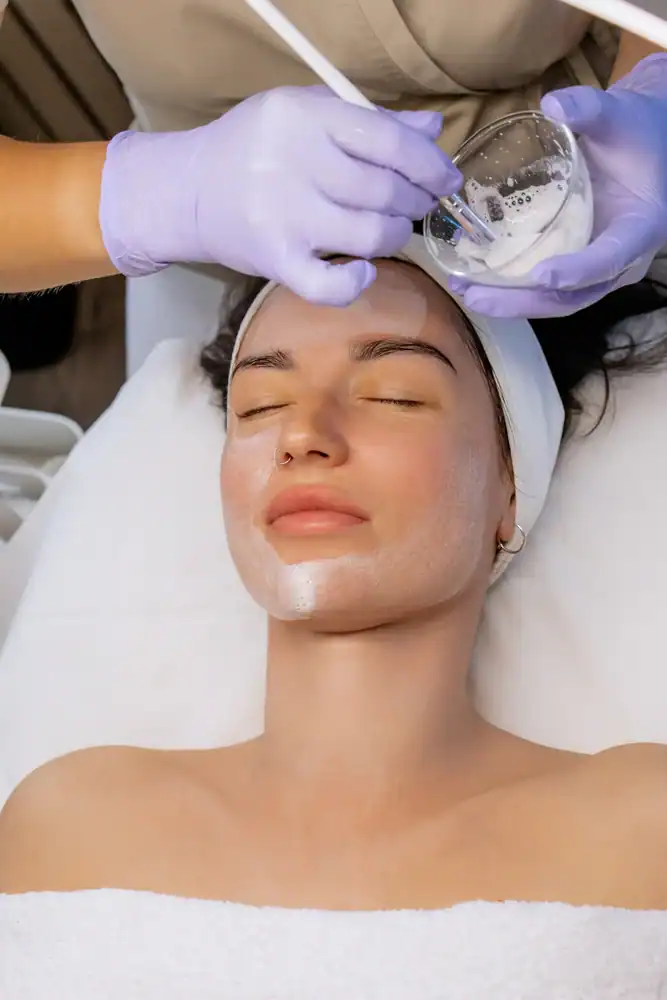
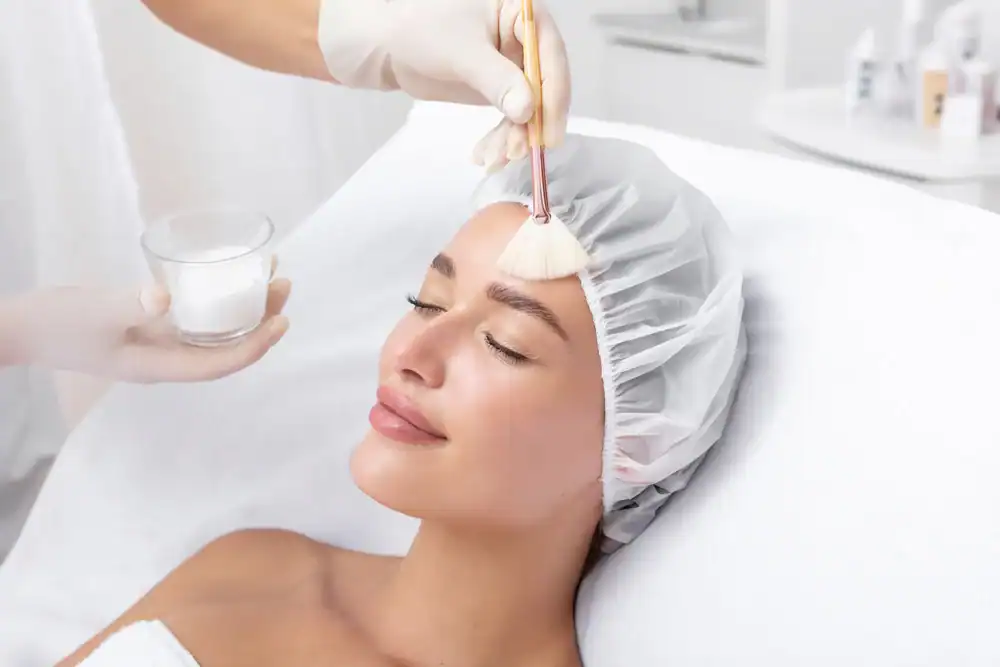
A traditional facial is a manual treatment. Your esthetician cleanses your skin, applies steam, exfoliates with a scrub or enzyme, performs extractions by hand, and finishes with a mask and moisturizer. It’s been the standard for decades — and done well, it’s genuinely relaxing and beneficial.
A HydraFacial is a different category of treatment entirely. We use patented Vortex-Fusion® technology — a medical-grade device that simultaneously cleanses, exfoliates, extracts, and infuses your skin with serums in a single, continuous motion. No manual squeezing. No guesswork. The results are consistent, immediate, and clinically measurable in a way that a traditional facial simply isn’t built to deliver.
The comparison isn’t about which one is “better” in the abstract. It’s about which one is right for what you’re trying to accomplish.
The HydraFacial process moves through several steps in one continuous treatment, usually completed in 30 to 45 minutes. It starts with a deep cleanse and gentle exfoliation to remove surface buildup — dead skin, excess oil, the kind of congestion that accumulates when you’re commuting through subway stations and walking city streets every day. Then comes the extraction step, where a vacuum-assisted tip clears out clogged pores without the manual pressure that leaves you red and irritated after a traditional facial.
What makes it genuinely different is what happens next. Medical-grade serums — customized to your specific skin concerns — are infused directly into your skin during the treatment, not just applied on top of it. If you’re dealing with dullness, there’s a brightening booster. Fine lines? There’s a peptide-rich anti-aging infusion. Breakouts and congestion? A salicylic acid-based option targets that specifically. The treatment is tailored to your skin, not a preset protocol applied the same way to every client who walks in.
That level of customization is one of the biggest separators between HydraFacial and a traditional facial. A skilled esthetician can adjust their product choices during a traditional facial, but they’re working with topical application — products sitting on the surface of your skin. HydraFacial’s technology delivers those actives at a depth and consistency that manual techniques can’t replicate.
The other thing worth knowing: there’s no downtime. You can walk out, get on the subway, and go straight to dinner or back to work. Your skin won’t be red or peeling. Most clients see an immediate glow that same day — not a “it’ll look better in a few days” situation. That matters a lot when you’re squeezing an appointment into a packed schedule.
Traditional facials aren’t obsolete — they still serve a real purpose, and dismissing them entirely would be an oversimplification. If relaxation is part of what you’re after, a traditional facial delivers an experience that a HydraFacial doesn’t try to replicate. The extended massage, the warm towels, the quiet — there’s genuine value in that, especially if stress is part of what’s showing up on your skin.
Traditional facials also work well as maintenance between more intensive treatments. If your skin is generally healthy and you’re not targeting a specific concern, a well-executed traditional facial keeps things balanced without over-treating. Some estheticians also develop a nuanced, hands-on read of your skin over time that informs how they treat you — that relationship-based care is something a device-driven treatment can’t fully replicate.
Where traditional facials fall short is when you’re dealing with a specific, measurable concern — clogged pores that won’t clear, persistent dullness, fine lines you’re starting to take seriously, or dehydrated skin that’s been stripped by a New York winter. Manual techniques have limits. The products used in a traditional facial work on the surface; they don’t penetrate the way infused serums do during a HydraFacial. And manual extractions, when done aggressively, can cause micro-tears, temporary redness, or post-facial breakouts — especially on sensitive or acne-prone skin.
The smartest approach isn’t to choose one and abandon the other. It’s to understand what each one does well, and build your skincare routine around that. Many clients use HydraFacial monthly for deep, results-driven treatment and incorporate a traditional facial when they want something more restorative and relaxing in between. Both have a place — the key is knowing which one to reach for when.
Want live answers?
Connect with a Dolce Aesthetics expert for fast, friendly support.
Skin type matters a lot here. HydraFacial is genuinely safe for all skin types — including sensitive skin, rosacea-prone skin, acne-prone skin, and deeper skin tones that can be prone to post-inflammatory hyperpigmentation after more aggressive treatments. The vacuum-assisted extraction is far gentler than manual techniques, and the serums are selected based on your individual concerns.
Traditional facials can be equally gentle — or significantly harsher, depending on what’s included. Steam, strong chemical exfoliants, and aggressive manual extractions can trigger reactions in sensitive skin. If you’ve had a bad experience with a traditional facial in the past, it may not have been facials in general — it may have been the specific techniques or products used.
Knowing your goal is the starting point. From there, the choice becomes a lot clearer.
For clogged pores and congestion, HydraFacial is one of the most effective non-invasive options available. The extraction step physically removes the buildup that causes blackheads and enlarged pores — not by squeezing, but through a controlled suction process that clears pores without traumatizing the surrounding skin. If you’ve tried traditional facials and still feel like your skin never looks truly clean, this is usually why: manual extraction has limits, and most estheticians are appropriately conservative to avoid causing damage.
Dullness is another area where HydraFacial consistently delivers. The combination of exfoliation and immediate serum infusion creates the kind of glow that shows up in photos without a filter. Celebrities have used it before major events for decades, not because it’s trendy, but because the result is reliable and immediate.
For dehydrated skin — which is genuinely common in Brooklyn and Queens, where harsh winters, overheated apartments, and constant indoor-outdoor transitions strip moisture from your skin on a daily basis — HydraFacial’s hyaluronic acid infusion step makes a visible difference. You can feel it during the treatment and see it afterward. A traditional facial can apply a hydrating mask, but it doesn’t deliver moisture the same way. If your skin feels tight and looks flat from November through March, that’s not just a product problem. It’s a depth problem, and HydraFacial addresses it directly.
Fine lines and early signs of aging also respond well. A study published in the Journal of Clinical and Aesthetic Dermatology found that HydraFacial significantly improves skin texture and reduces the appearance of fine lines and wrinkles. For clients in their late 20s and 30s who are in prevention mode and not yet considering injectables, monthly HydraFacials build cumulative improvements over time that are measurably real.
Living in Brooklyn or Queens puts specific demands on your skin that people in other markets simply don’t have. The subway alone — the particulate matter, the metal dust, the recycled air — deposits a layer of urban pollution on your skin every single day. Add in traffic exhaust, construction, humidity in the summer, and the brutal dry cold from October through March, and your skin is dealing with a lot more than someone living in a quieter, less dense environment.
HydraFacial specifically addresses this reality, helping improve the appearance of congestion and surface buildup associated with pollution and dense urban environments. That’s not a generic benefit. That’s a direct response to what Brooklyn and Queens residents are actually experiencing.
The no-downtime aspect of HydraFacial is also genuinely more relevant here than it might be elsewhere. If you’re commuting, working, and managing a full life in one of the most active urban environments in the country, you can’t afford to look red and irritated for 48 hours after a facial treatment. You need to be able to walk out of your appointment, get back on the train, and look like yourself — or better. HydraFacial makes that possible in a way that more aggressive treatments don’t.
At Dolce Aesthetics NY, we keep our Brooklyn location on 3rd Avenue in Bay Ridge open until 8PM on weekdays — because a 7PM appointment after a long commute shouldn’t be a luxury, it should just be an option. We also offer full pricing transparency upfront, because no one should be surprised at checkout after they’ve already sat down in the chair.
All of our HydraFacial treatments are performed under the oversight of Jennifer DiLandro, a nurse practitioner with 18 years of medical experience and a former Director of Nursing at Synergy First Surgical Center in Brooklyn. That level of medical supervision isn’t standard at most spas in the area — and in New York State, it’s a legal requirement that matters.
If you’re after relaxation and general maintenance, a traditional facial is a solid choice. If you want visible, measurable results — clearer pores, better hydration, smoother texture, a real glow — HydraFacial is the more effective tool for the job. And if you want both over time, using them strategically together is exactly how the best skincare routines are built.
The most important thing is making sure whoever is treating your skin actually understands it. Not just which products to use, but why — and what your skin specifically needs based on your concerns, your history, and your goals.
If you’re in Brooklyn or Queens and ready to stop guessing, we’re a good place to start. Book a free consultation and get a straight answer about what your skin actually needs — no pressure, no packages pushed before you’re ready, just an honest conversation with someone who’s been doing this for a long time.
Summary:
Share: